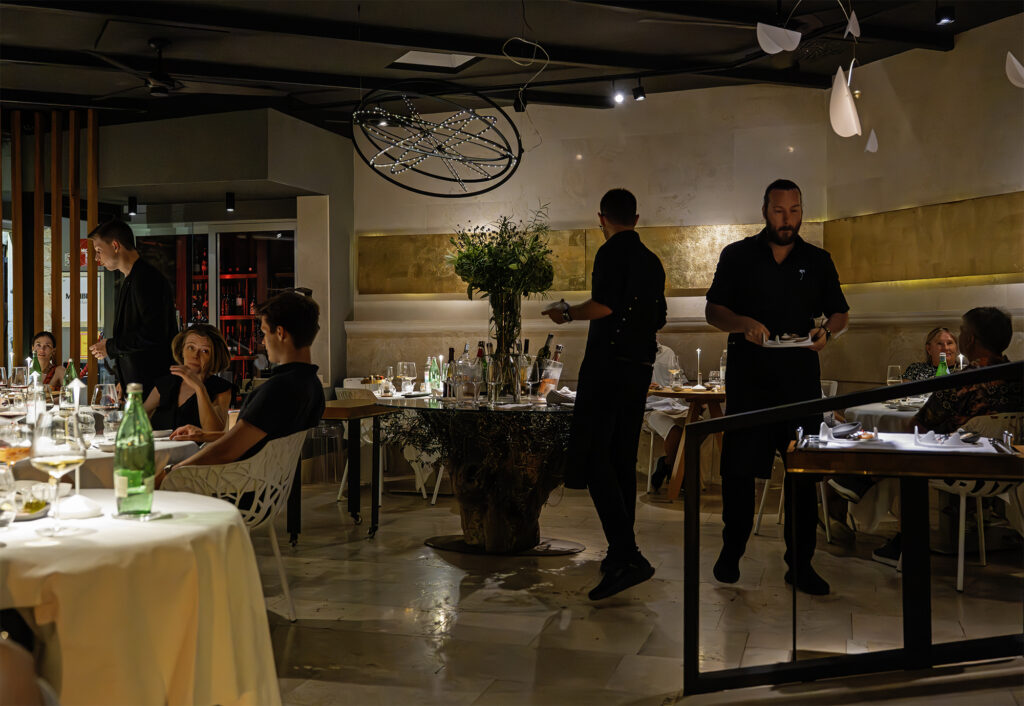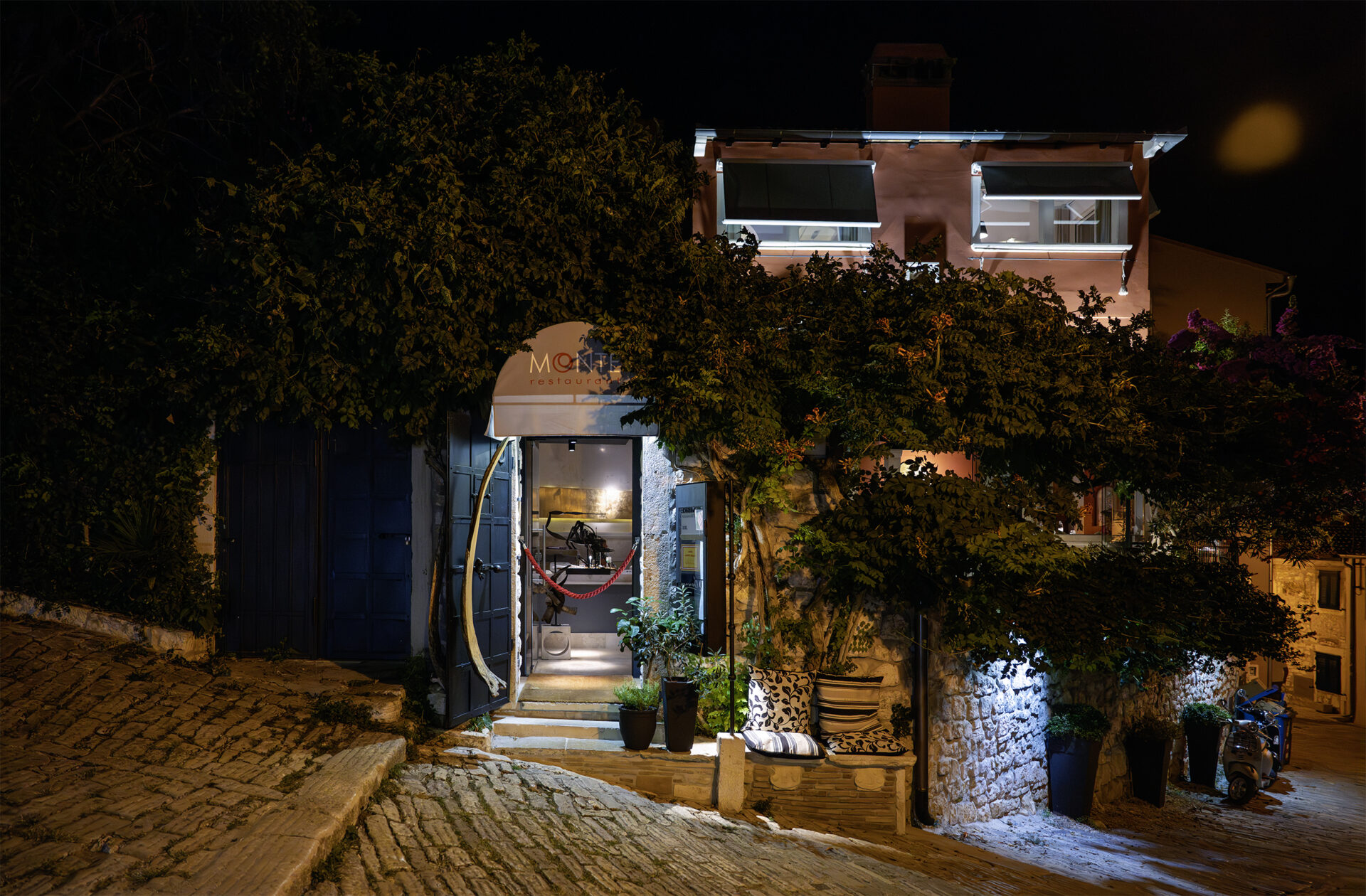
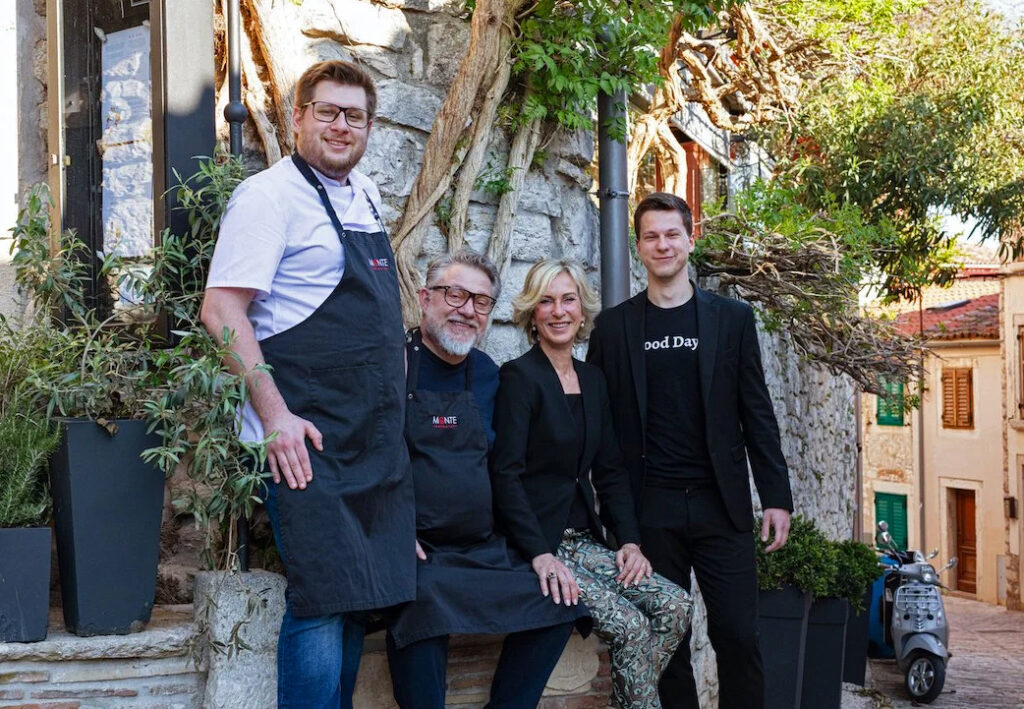
Located in the colorful fishing town of Rovinj in Istria, Monte is a family story that began in 1985, in the very house where chef Danijel Đekić was born. Originally opened as a traditional Istrian tavern by his parents, the restaurant evolved into a modern gastronomic destination under Danijel and his wife, sommelier Tjitske Đekić-Brusse. In 2017, Monte became the first restaurant in Croatia to receive a Michelin star, establishing itself as a pioneer of contemporary Croatian haute cuisine while remaining deeply connected to local traditions and ingredients. Today, the next generation is taking over the helm, with son Ilja Đekić working in the kitchen alongside his father, and son Simon Đekić leading the dining room and wine service.
Danijel Đekić’s path into cooking was unconventional. After briefly studying civil engineering, he left university and entered the restaurant business with little formal experience. Driven by curiosity and a constant desire to learn, he worked abroad, particularly in the Netherlands, and spent years traveling through major gastronomic capitals such as Paris, London, Barcelona, and New York to study new techniques and culinary trends. Đekić still describes his cooking style as “evolutionary,” with dishes that are constantly refined and reinvented to remain original and impossible to replicate elsewhere. Monte’s cuisine is rooted in the terroir of Istria and the Adriatic coast. Much of the produce comes directly from the Rovinj market, local fishermen, butcher shops, and nearby farms, while the restaurant’s tasting menus reinterpret regional flavors through modern techniques and highly detailed presentation. The kitchen often transforms traditional recipes and childhood flavors into contemporary fine dining compositions.
The restaurant is known for its three tasting menus: Red, Green, and Blue, inspired by the RGB color model, with each one reflecting a different culinary philosophy. Green focuses on refined vegetarian cuisine built around seasonal vegetables and wild herbs; blue celebrates luxury ingredients from sea and land; and red highlights a single premium ingredient prepared in 3 ways over 6 courses, according to zero-waste and nose-to-tail philosophies. The experience is made complete by an exclusively Croatian wine list.
My dinner at Monte dates back to the summer of 2024, and for reasons lost to memory we chose to make our own menu rather than pick from the RGB options. This explains why you might see a few repetitions here and there in the dishes I’ll be describing, and why there will be two dishes for each course. Had one of us chosen the red menu, we would have gotten a whole lobster head through tail, divided between the dishes.
Note that the dish titles below are taken from the menu. Let’s get started!
INTRO
Before the actual meal even begins, we are presented with no fewer than three rounds of plates: crackers that serve as an opportunity to apply some hand sanitizer, a collection of six different amuse-bouches, and a basket with two kinds of focaccia, olive oil, butter, and salt.
ROSEMARY CIRCLE
First we have red crackers with a little bit of cream cheese, served in the middle of a pot of rosemary, and we’re instructed to begin by spraying some rosemary sanitizer on our hands. The crackers are colorful and crunchy, but the most noticeable aspect is the smell of rosemary.
A WALK THROUGH THE ISTRIAN LANDSCAPE
black and green olive gougeres
mini pizza margherita
crystal bread with black truffle
green asparagus with cream cheese
meadow flower bouillon
chawanmushi with duxelles of mushroom and algae
The amuse-bouches arrive as an elegant sequence of small bites, intended as a representation of the Istrian landscape. The black and green olive gougères are more reminiscent of small profiteroles than classic gougères, and they are filled with intensely concentrated olive creams (one green, one black) while the choux pastry itself is infused with olive flavor, and small parmesan crackers cover the holes used to pipe in the filling. The result is remarkably expressive and true to the ingredients. The black olive version stands out for its richer texture and better balance, while the green olive version feels slightly dry. Both could benefit from a touch of cheese in the dough, as in a real gougère. Still, both deliver deep, vivid olive flavors and are great ideas.
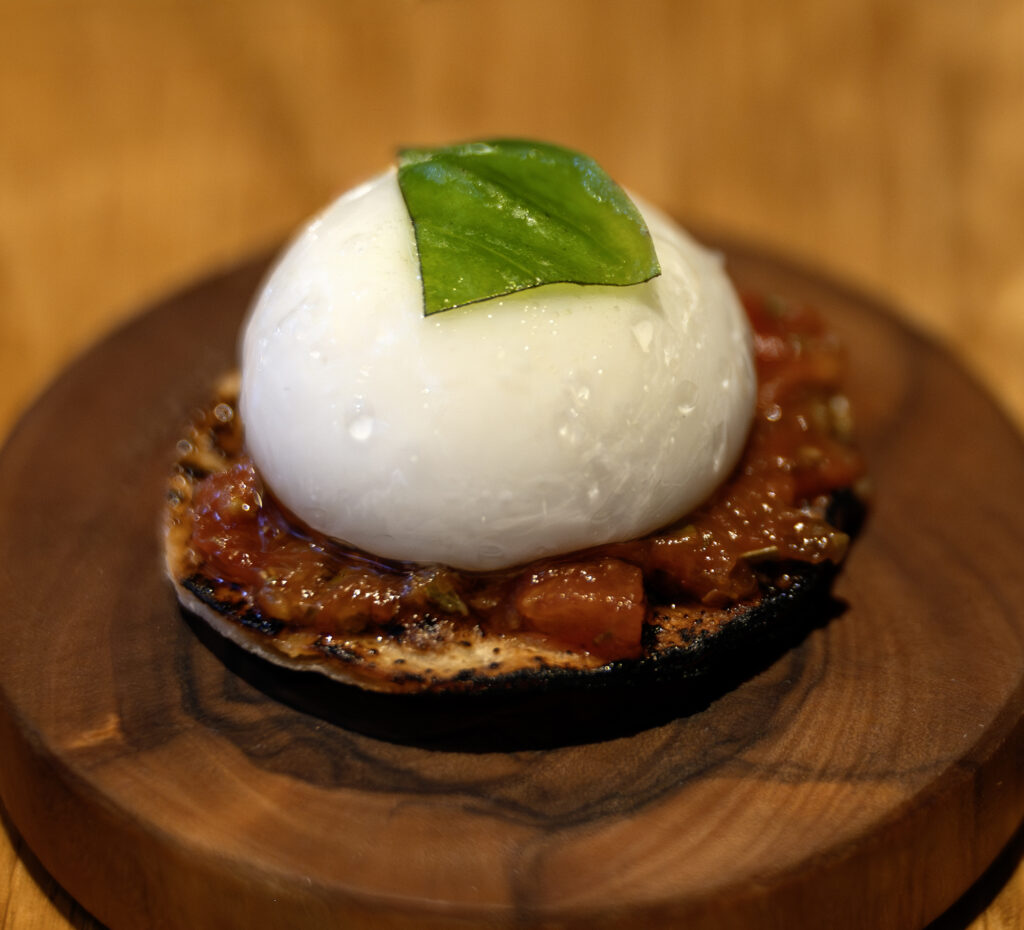
The playful interpretation of a mini Margherita pizza looks deceptively simple: a crisp cracker topped with tomato sauce and what appears to be a small ball of burrata crowned with basil. In reality, the “cheese” is a delicate sphere filled with a liquid whey-like center that bursts in the mouth. Surprising and intense.
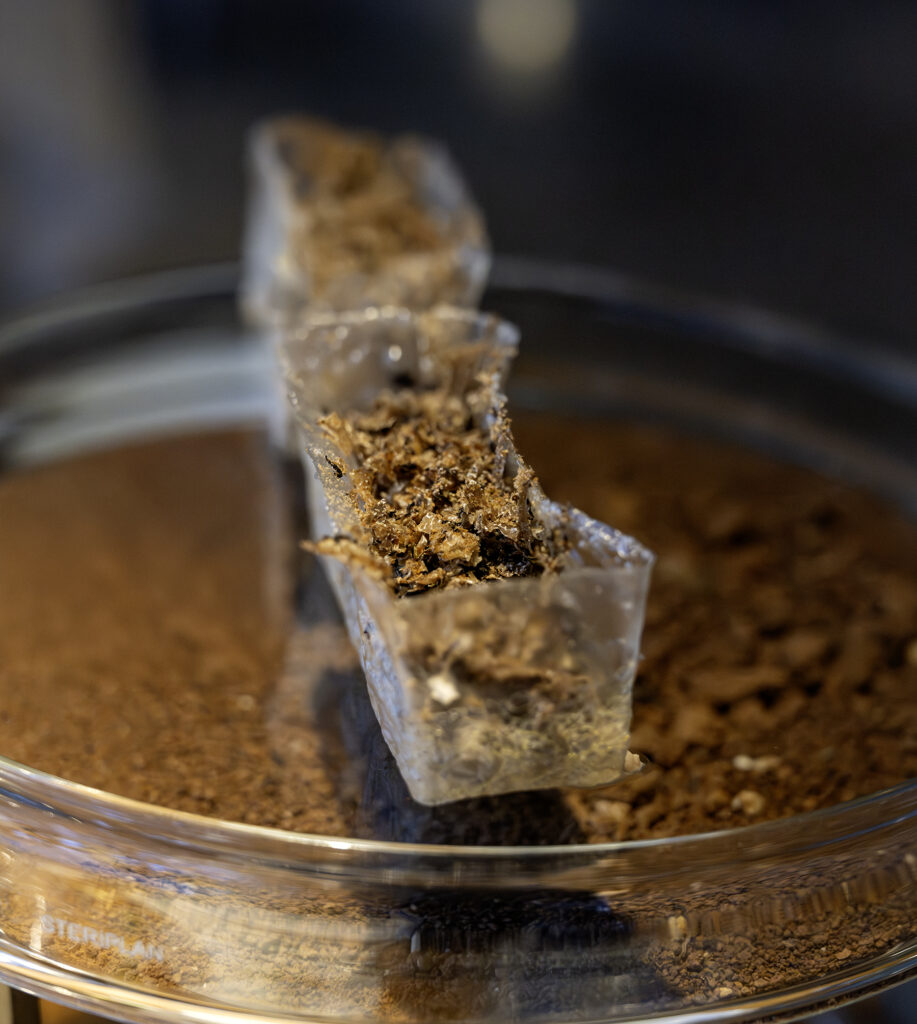
The crystal bread with black truffle consists of an ultra-thin crisp, almost like transparent rice paper, topped with mushroom cream and generous shavings of Istrian summer truffle. Rather than overwhelming the palate with artificial intensity, the dish allows the gentle aroma of summer truffle to come through naturally, highlighting the ingredient with restraint and precision.
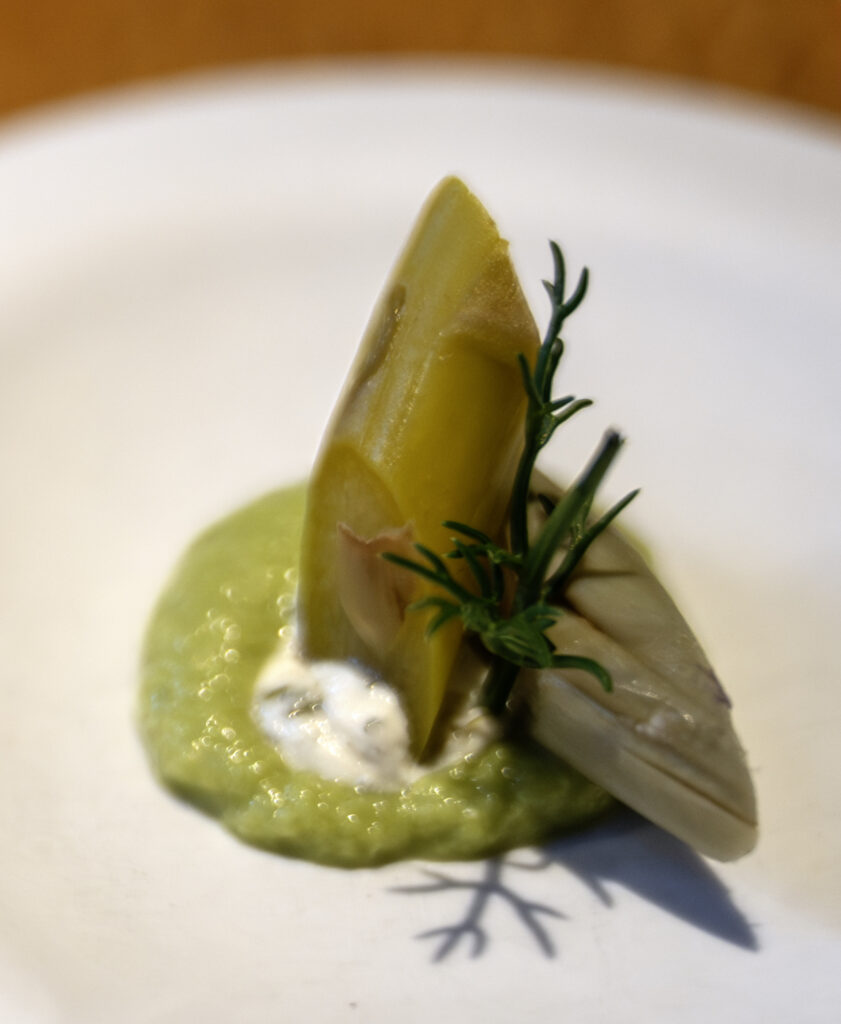
The pickled green asparagus with asparagus cream and cream cheese brings freshness and acidity to the progression. The asparagus is vibrant and beautifully complements the smooth cream and the richness of the cheese.
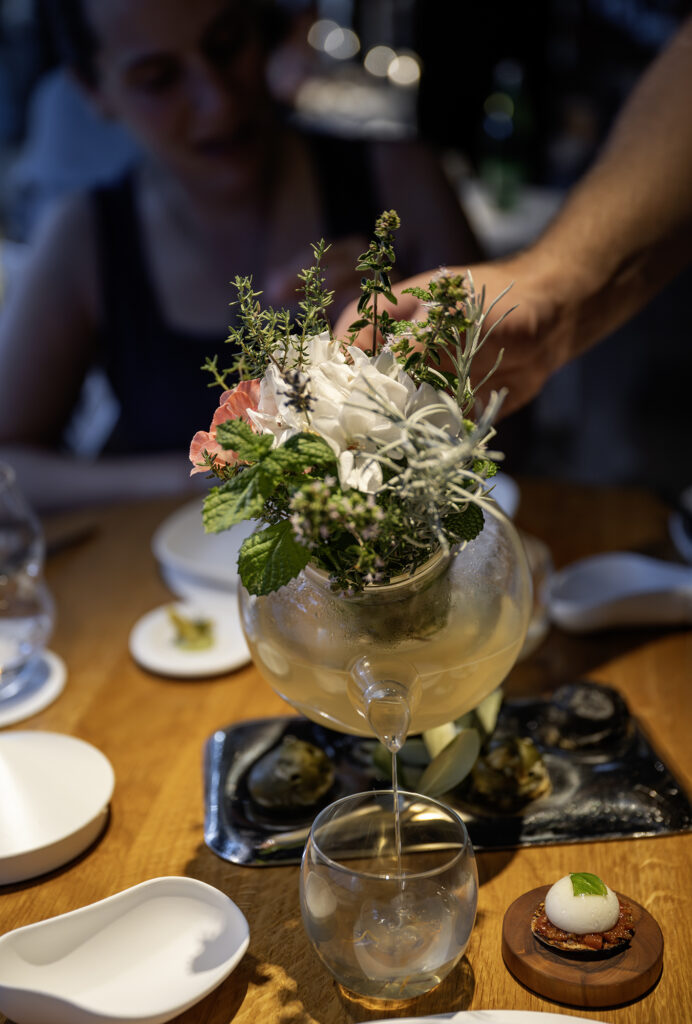
The meadow flower bouillon with saffron is served slightly warm, almost at room temperature, which suits the summer evening perfectly. It’s deeply aromatic with a pronounced saffron character, which I like, but the broth remains balanced, with floral and vegetal notes.
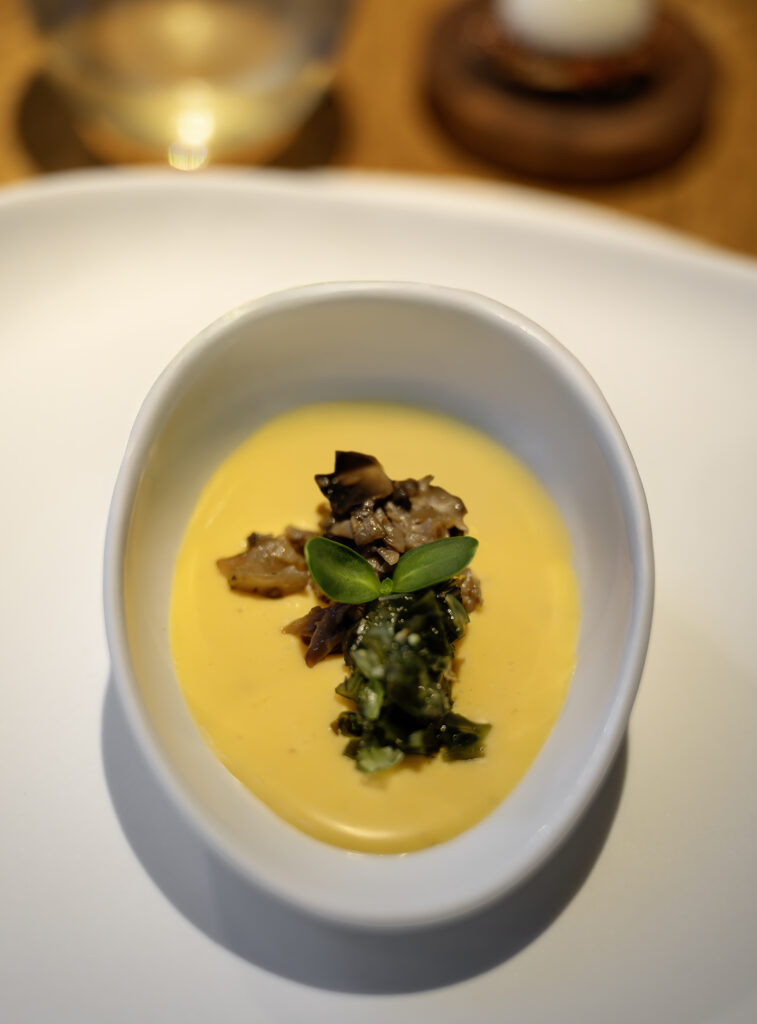
Finally, the chawanmushi with mushroom duxelles and algae is a Japanese-inspired steamed egg custard topped with a mushroom preparation that tastes like truffle. I’m not sure I like the slightly weird texture, but other diners might appreciate it more than me.
Overall, the entire opening display demonstrates a high level of creativity and technique, with nearly every bite delivering something memorable and distinctive.
To accompany the amuse-bouches, we’re served Monterosso Brut Nature Rosé made from Montepulciano grapes. It’s pleasant though not particularly remarkable.
OUR DAILY BREAD
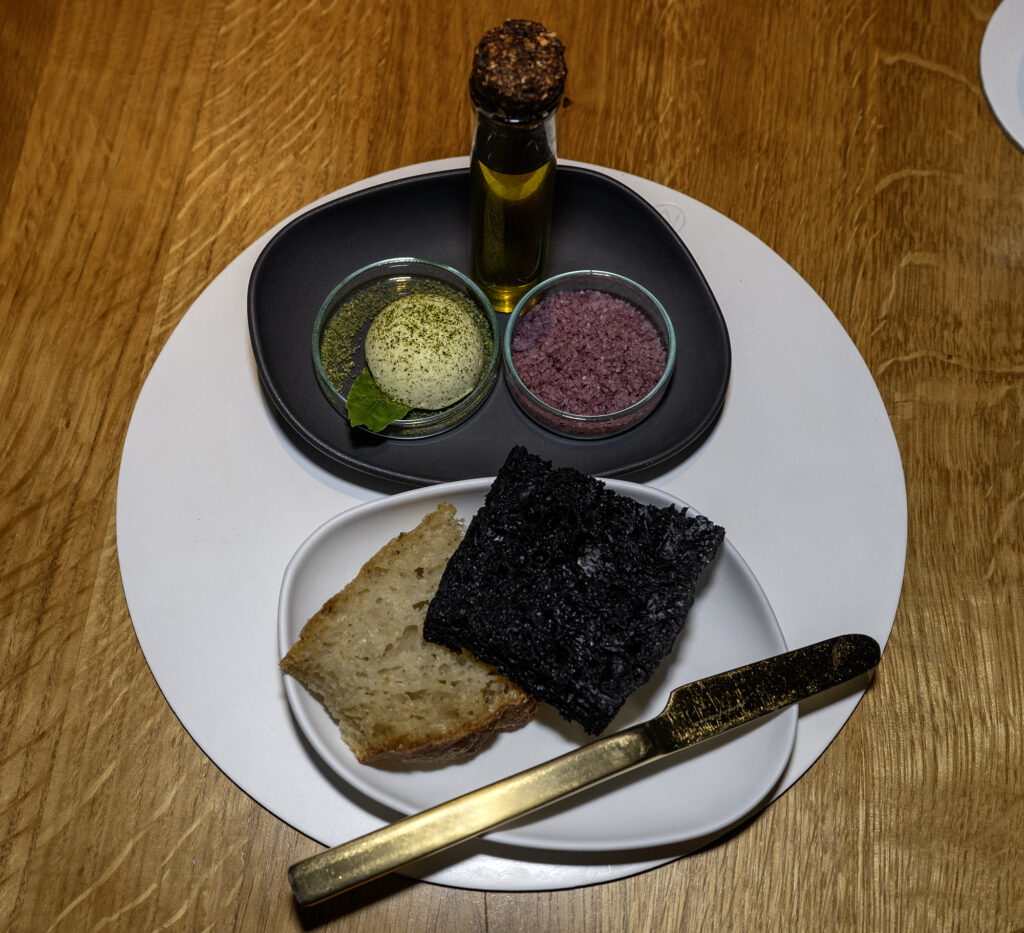
black focaccia with smoked garlic
focaccia with aromatic herbs
our extra virgin olive oil “Fratuzza”
butter with laurel powder
salt in Terran red wine
The black focaccia with smoked garlic is of course made with cuttlefish ink. It has a light and airy texture with a strong savory flavor. The smoked garlic comes through clearly. The focaccia with aromatic herbs is equally airy and well made, though much more neutral in flavor. The herbs are subtle and remain in the background.
The breads are served with Monte’s very own extra virgin olive oil – excellent and full of flavor – and butter topped with laurel powder. The butter has a strong, milky taste and is slightly salted, which helps bring out its flavor. Finally, there’s salt infused with Terran red wine. If you ask me, it’s just salt.
First course
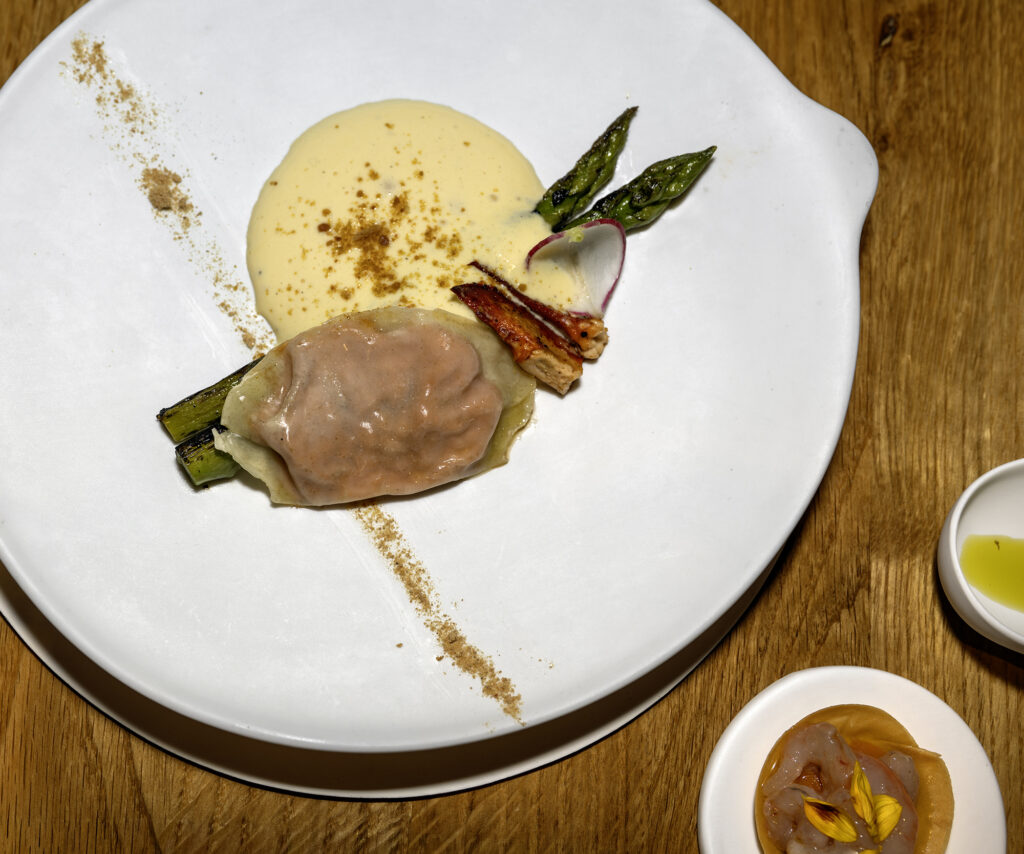
LOBSTER DUMPLINGS, green asparagus, sauce hollandaise
ADRIATIC SHRIMP tartlet
The lobster dumplings, or rather dumpling singular, with green asparagus and hollandaise sauce, is filled with lobster tomalley and cheese, and underneath there is lobster meat and lobster claw. The lobster filling has a slight bitterness that is somewhat surprising and the cheese is difficult to notice. The asparagus with hollandaise is classic and straightforward, and the grilled asparagus works nicely with the richness of the sauce.
Alongside the dumpling comes an Adriatic shrimp tartlet. The raw shrimp sits on a thin, crisp base, almost like rice paper, and appears lightly marinated in oil. It rests on an orange-hued preparation made from carrots and lobster. It’s a delicious way of making shrimp, highlighting its sweetness.
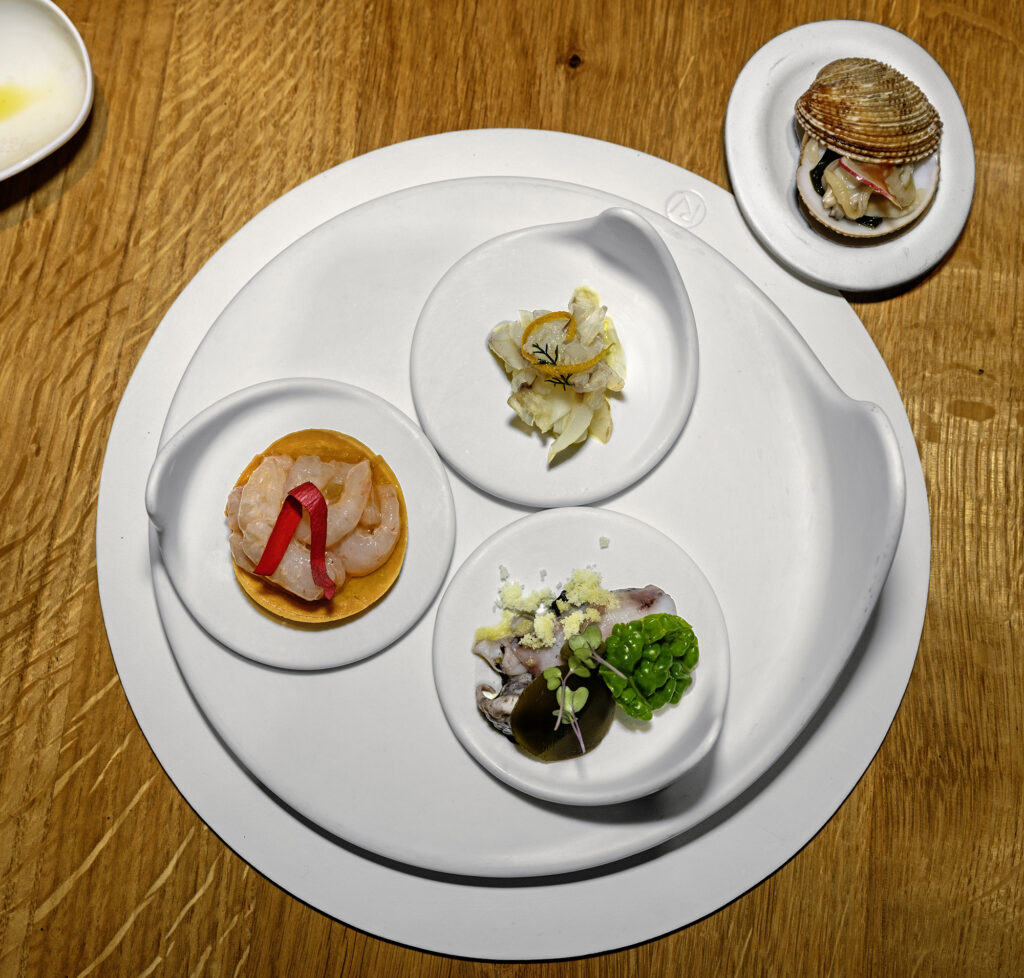
FISH MARKET, Adriatic shrimp, dry aged branzino, sepia
VENUS CLAM, raw algae, lemongrass, extra virgin olive oil
The Fish Market combines several small plates: dry-aged branzino, Adriatic shrimp (the same tartlet as the one that came with the lobster dumpling), cuttlefish, and Venus clam.
The fish is salt-cured and served with fennel marinated in olive oil, a much better way to serve raw sea bass than the usual carpaccio.
The raw cuttlefish is extremely tender and soft, dressed with a little lemon, and there’s a mix of cuttlefish ink and olive oil underneath. It’s paired with lightly marinated kale, with onion powder and possibly lemon. The whole preparation is fresh and balanced.
On the side is the Venus clam with raw algae and lemongrass. The dish has a distinctly Japanese character, reminiscent of a miso soup with strong kombu flavors. It is deeply umami-driven, and while the seasoning is more intense and less subtle than elsewhere, it works well with the clam.
These dishes are paired with a Malvasia from Monterosso (again). The wine is mineral and clean, but relatively simple (again).
Second course
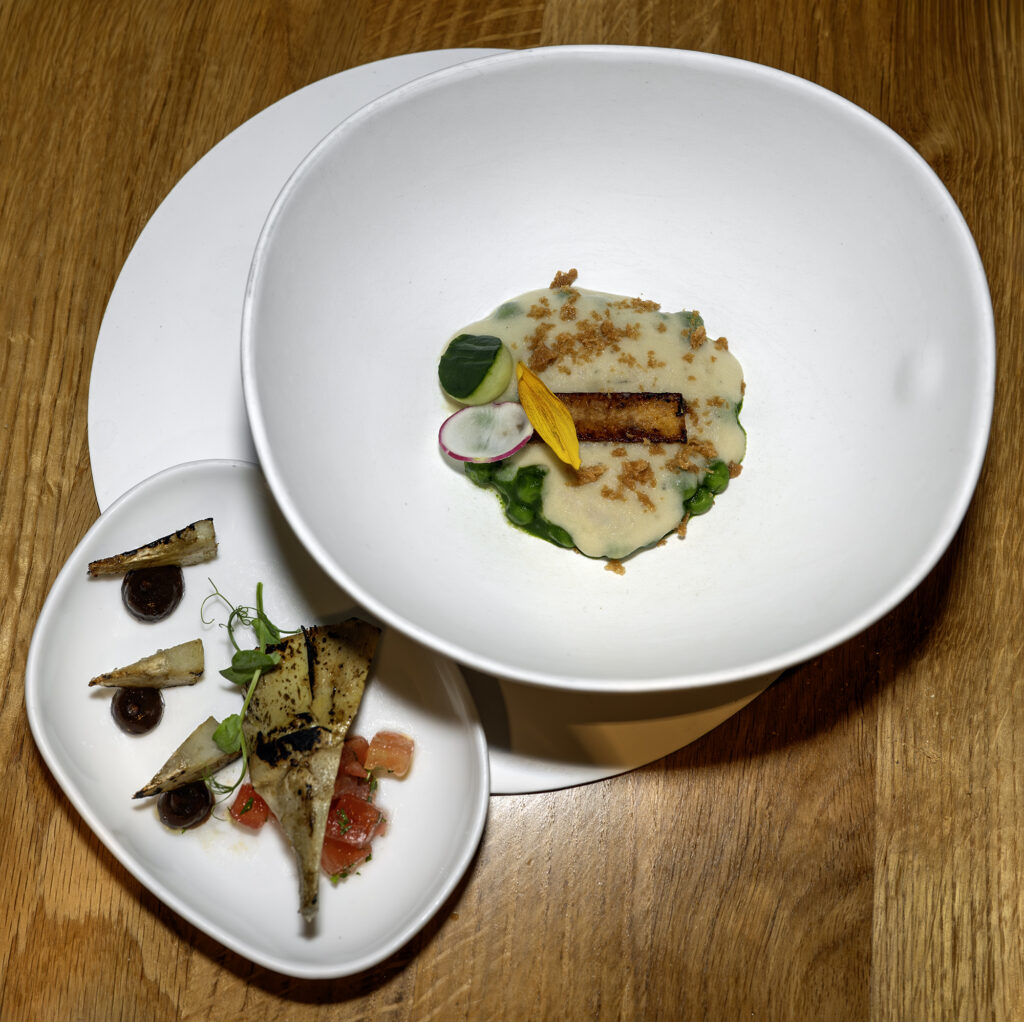
ARTICHOKE, peas, tofu, foam, grilled artichoke, bell pepper cream
The dish combines several artichoke preparations. The first consists of grilled marinated tofu, on a bed of artichoke foam with pieces of artichoke, peas, and cucumber, sprinkled with panko. The tofu has a surprisingly meaty flavor that gives depth to the otherwise very light and vegetable-focused dish.
On the side is grilled artichoke served with sauce vierge (olive oil, lemon juice, chopped tomatoes, basil) and a cream of plum and fermented garlic. The combination works very well.
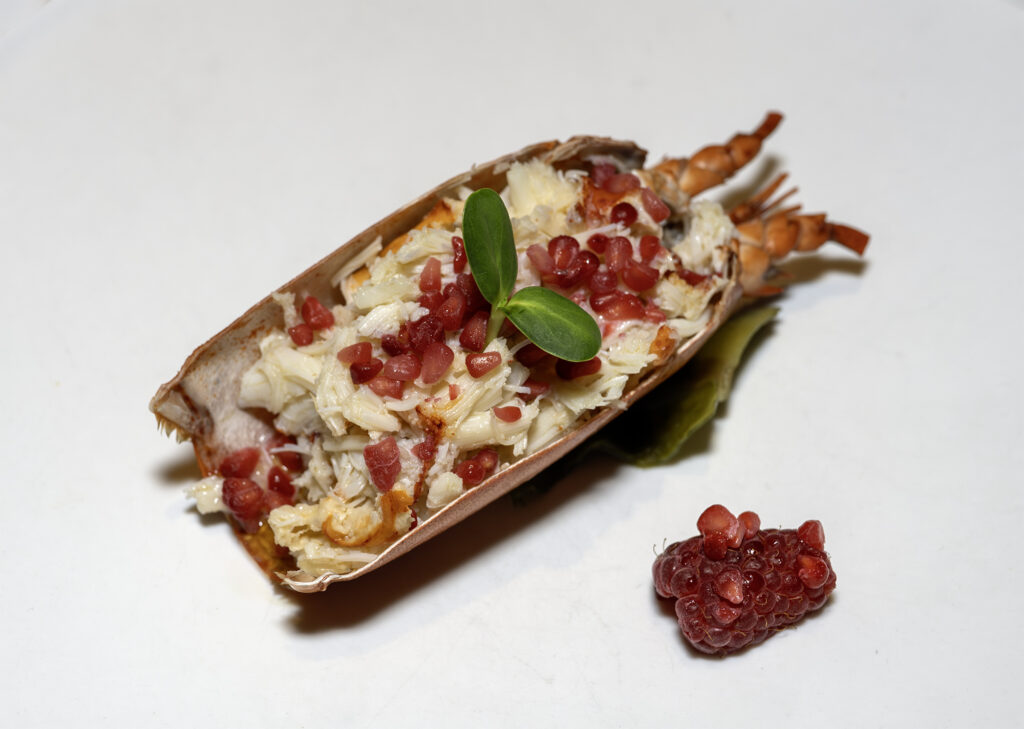
LOBSTER salad, avocado, raspberry
The lobster salad combines shredded lobster claw meat with (guess what) avocado and raspberry. The lobster is very flavorful, and the tangy raspberry pairs nicely with its sweetness. At first the dish feels mostly focused on these two ingredients, but the avocado becomes more present on one side of the plate, almost like an unseasoned guacamole. Avocado and lobster is a tried and true pairing, of course. The extra raspberry on the other side of the plate feels unnecessary given how much berry is already present in the dish, but the salad itself works very well overall.
The wine pairing is an Istrian Sauvignon Blanc from Arman, located near Poreč, about ten kilometers inland in one of the region’s wine-producing areas. I am told the wine shows green and tropical aromas, intended to complement the sweetness of the lobster. Personally, I detect a nose of peach and perhaps apricot. The palate is slightly sweet and pleasant overall, though not especially memorable.
Third course
LOBSTER BISQUE, fennel, lobster meat, roe
LIMFJORD OYSTER, black fried, cucumber, lemon jelly
The lobster bisque is poured tableside over lobster meat, fennel, and trout roe. The soup itself is extremely concentrated, with a touch of bitterness and a deep lobster flavor that suggests careful extraction from the shells. Liquid nitrogen gives it a light foamy texture. The fennel works with the richness of the bisque and brings a fresher note to the dish. The trout roe adds texture and pops of salinity, although its flavor feels slightly out of place with the lobster.
Alongside comes the Limfjord oyster, coated in breadcrumbs made from the black focaccia we had in the bread basket and fried until crisp. The oyster itself is very good, with the squid ink and garlic flavors from the coating coming through clearly. It is served with cucumber and lemon gel. While the oyster works on its own, it doesn’t pair naturally with the lobster bisque.


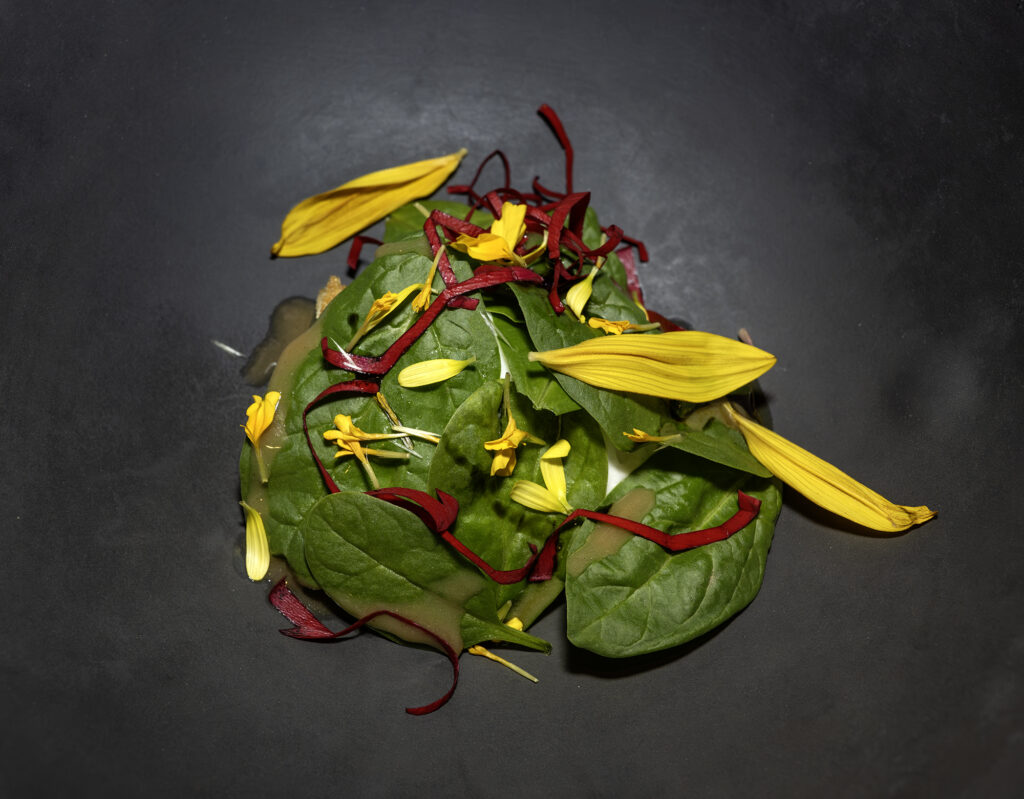
GOAT CHEESE STRUDEL, spinach leaves, pumpkin, goat cheese, flowers and petals
The goat cheese strudel combines Istrian goat cheese, spinach, pumpkin, and herbs. The strudel itself is long and fried, filled with goat cheese and a large spinach leaf. It is served with spinach espuma, butternut squash cream, and a salad of baby spinach and flowers. The butternut cream is sweet and soon reveals pine nuts that add some crunch. The dish is good but maybe too green-focused; the amount of raw spinach feels excessive, and decorating so many plates with leaves or petals is becoming gimmicky.
The wine pairing is a 2019 Istrian Malvasia from Eligio Pilato in Vižinada, near Poreč. The wine is made in a Burgundy style, aged sur lie and in barriques, chosen to match the stronger and more pungent character of the lobster bisque. It has clear oak on the nose, along with buttery notes that reinforce the comparison to white Burgundy, but the oak remains balanced and never excessive. Rather than emphasizing the more typical characteristics of Malvasia, which I’m not overly fond of, the winemaker has produced something more international that pairs naturally with the richness of the bisque.
Fourth course
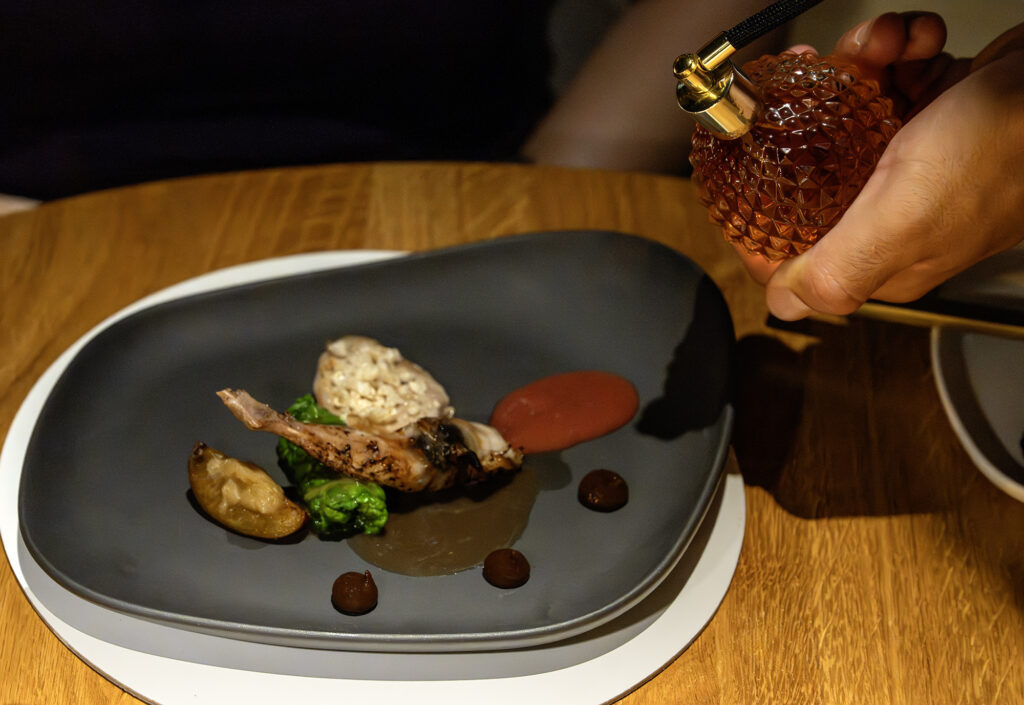
QUAIL, filet, stuffed leg, kale and liver roll, plum, cauliflower
The quail is interpreted in three variations, and there’s a lot going on. The excellent breast has a crisp topping, possibly puffed rice, and is slightly over salted, though this feels intentional as it balances the sweeter components on the plate. The stuffed quail leg contains a very concentrated plum preparation, likely reduced or stewed plum, giving a sweet and sour intensity. There is also a kale roll filled with quail liver, which carries a slight bitterness. The plate is completed by a quarter of cooked plum with onion compote, dots of plum and black garlic cream, a magenta-colored plum cream that tastes both sweet and bitter, and a delicious quail jus. Finally, the whole lot is sprayed tableside with šljivovica (plum brandy). The overall profile combines sweet, salty, sour, and bitter elements. Very nice.
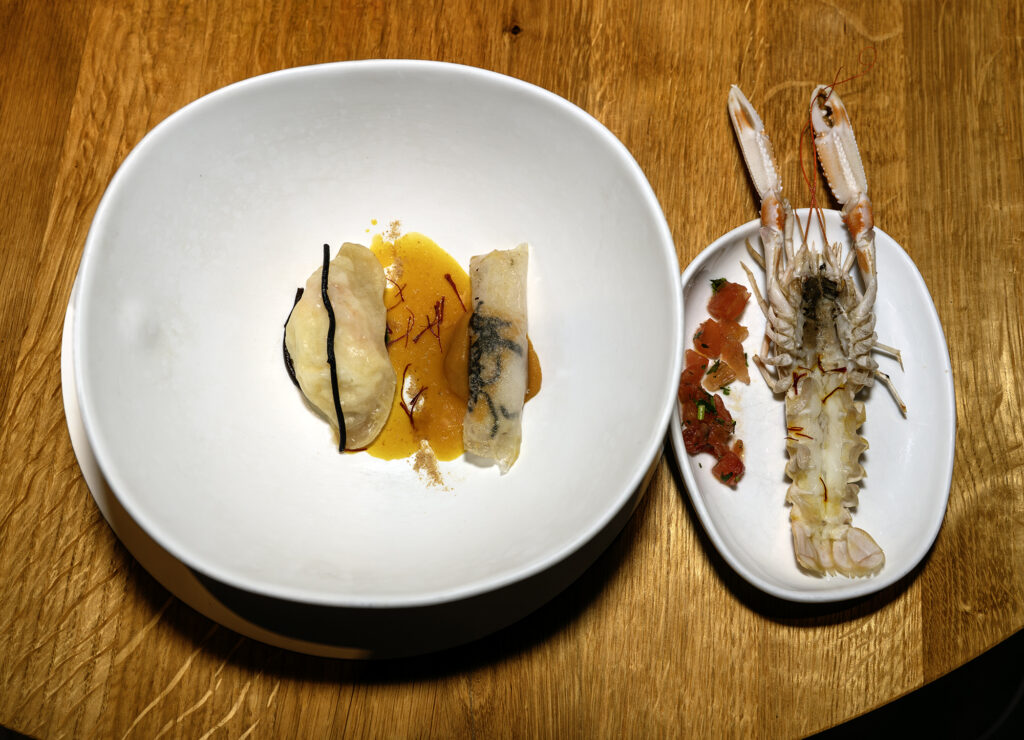
SCAMPI, dumpling, roll, saffron sauce. SCAMPI, grilled, sauce vierge, saffron
The scampi (langoustine) also appears in three preparations. One is a wonton-like dumpling made with cheese, with a kind of Granny Smith apple granola underneath. Another is a roll in fried rice paper with butternut cream and cucumber dice. Both share the same bowl, and the waiter pours a rich saffron velouté to finish the dish. The third scampi, on a separate plate, is very lightly grilled and accompanied by sauce vierge, saffron, and sausage, lightly cooked and later dressed with additional saffron. The langoustine and the saffron – as threads as well as in the sauce – form a powerful presence throughout the dish, giving it a very tight and focused flavor profile. And yet there are so many elements that it’s hard to mention them all!
The sommelier pours a late harvest but still dry white wine, from Ivan Enjingi in Kutjevo, Slavonia. The 2015 blend of Riesling, Graševina (Welschriesling), Sauvignon Blanc, Pinot Gris, and Gewurtztraminer has notes of exotic fruits and flowers. This wine makes sense with the saffron.
Finale
PETITS FOURS
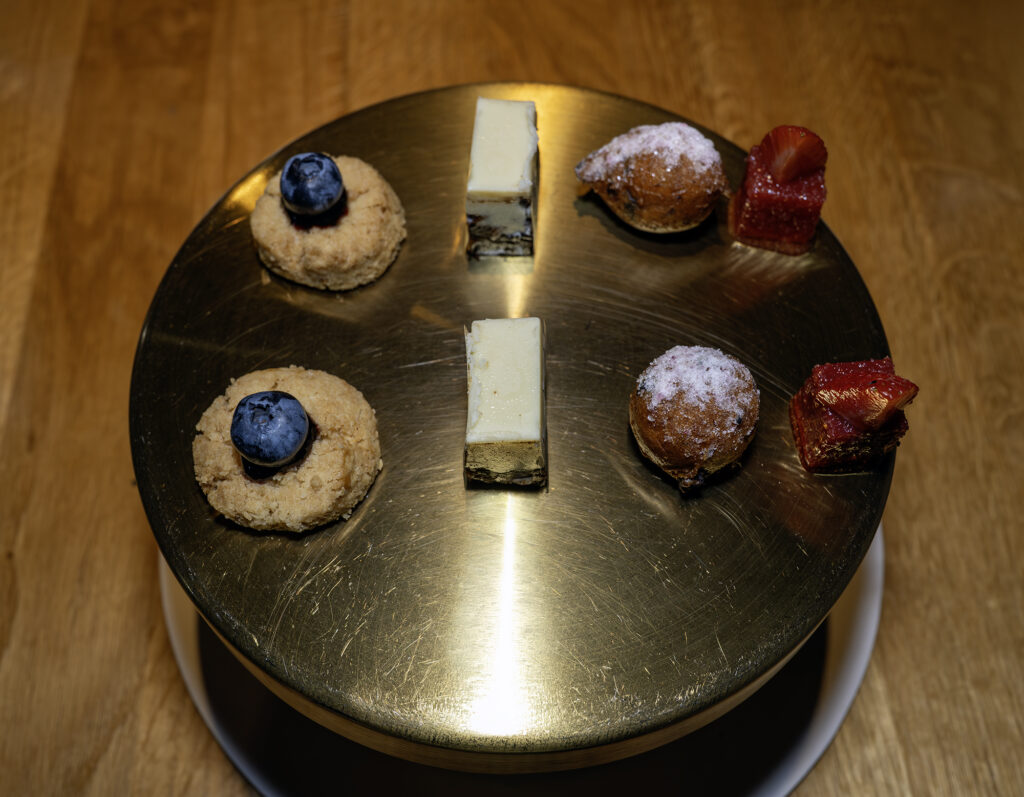
Dutch butter cookie with blueberries
strawberry jelly
fritula with candied olives
chocolate date almond bonbon
That’s right, we decided to skip the full dessert course! The petits fours begin with a Dutch butter cookie, resembling a light shortbread, topped with blueberries. Next, the strawberry jelly, similar to a pâte de fruit, topped with a piece of fresh strawberry. The fritula with candied olives (fantastic pairing that brings an interesting sweet-salty contrast) is small but still fairly doughy and heavy in texture. Lastly, Monte’s version of bajadera, which is less dense than more traditional versions. The combination of white chocolate, almonds, dates, and bourbon makes it very sweet, with the white chocolate dominating.
And as if we didn’t have enough wine, I order a teranino (a liqueur made from Teran wine) from Rossi as a digestif. Unlike some versions that taste like sugared red wine, this teranino boasts herbal and floral notes, possibly anise and candied violet. With its bitterness, it’s pretty much a cross between an amaro and a dessert wine.
Final thoughts!
The meal feels a bit influenced by the philosophy of Pierre Gagnaire, where a main plate is surrounded by a constellation of smaller ones, thus juxtaposing flavors, textures, and / or ingredients. Many dishes at Monte consist of multiple small preparations brought together on the same plate or in several serving pieces side by side, like the “Fish Market” course, where different products from the market are presented together because they’re good individually rather than because they’re tightly constructed around a few flavors. The table is constantly filled with multiple elements, sauces, and side preparations. But this doesn’t mean I didn’t enjoy some superb food pairings – langoustines and saffron, lobster and raspberry, fritula and candied olives.
The execution is generally very strong considering the complexity of the dishes. Some components work better than others, but nothing feels poorly made at all. At the same time, there are recurring themes that may divide diners. The use of offal in both the lobster and quail dishes is quite prominent. It fits clearly within the restaurant’s nose-to-tail philosophy and the desire to use the entire ingredient, whether lobster or quail, but it may not appeal to everyone. Several dishes develop noticeable bitterness toward the end. But I do note again that ordering an RGB tasting menu rather than picking and choosing our own dishes would likely have resulted in fewer offal dishes too.
There are also moments where the presentation becomes gimmicky. An excessively large number of dishes are finished tableside, even including an amuse-bouche and a cocktail, and flower petals appear repeatedly throughout the meal.
The pours for the wine pairings are quite generous, closer to full glasses than tasting portions. The first wines didn’t leave a lasting impression, but the last glasses were more interesting.
Overall, Monte is a very ambitious and technically accomplished restaurant, with a strong point of view and a willingness to take risks. Make sure to come hungry – and thirsty!