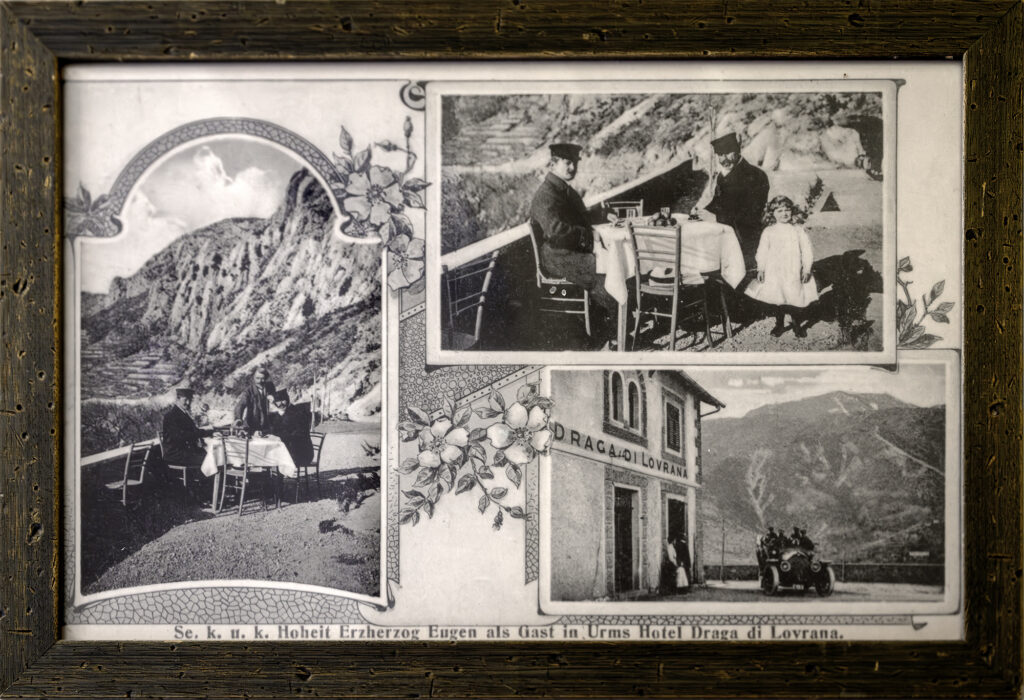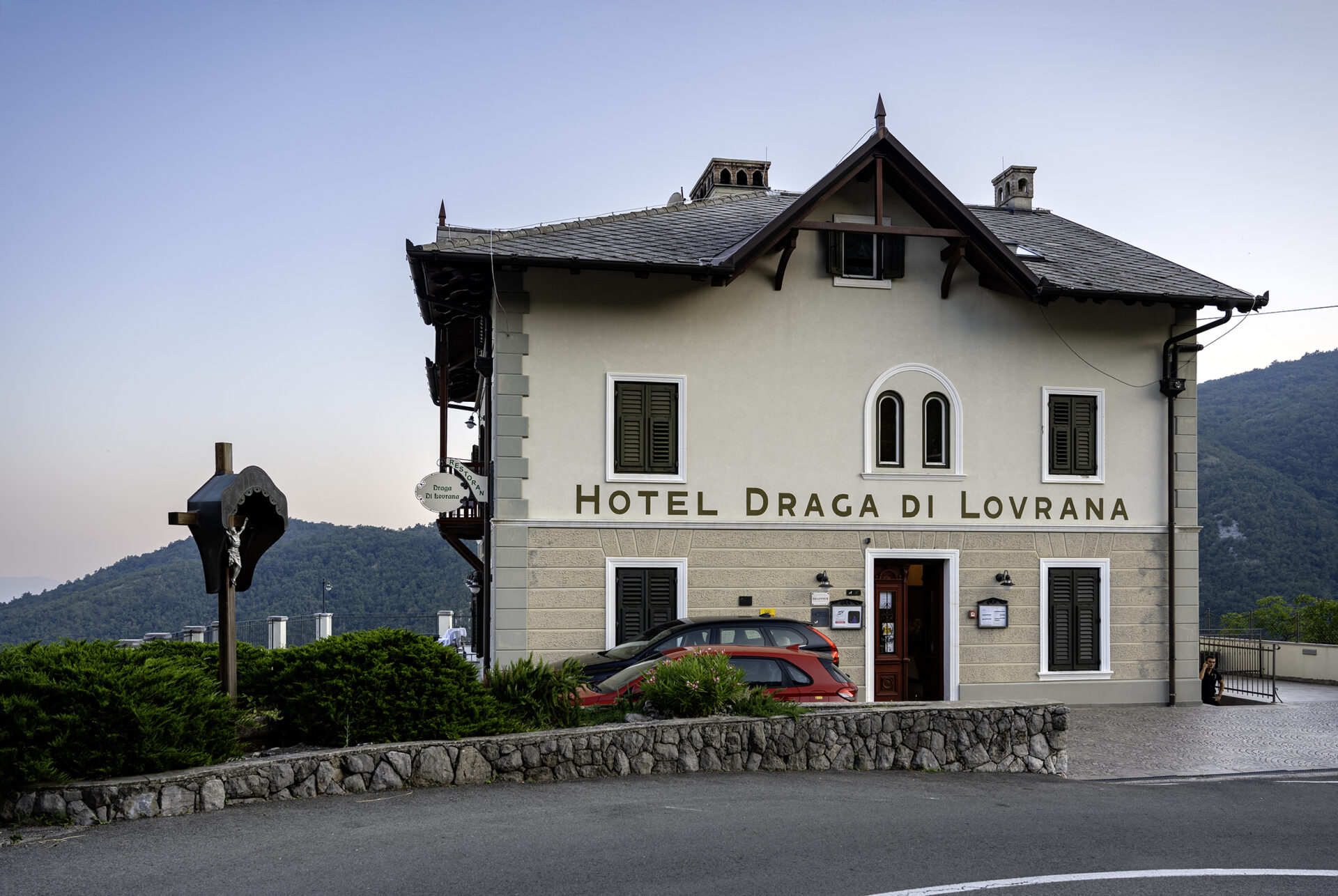
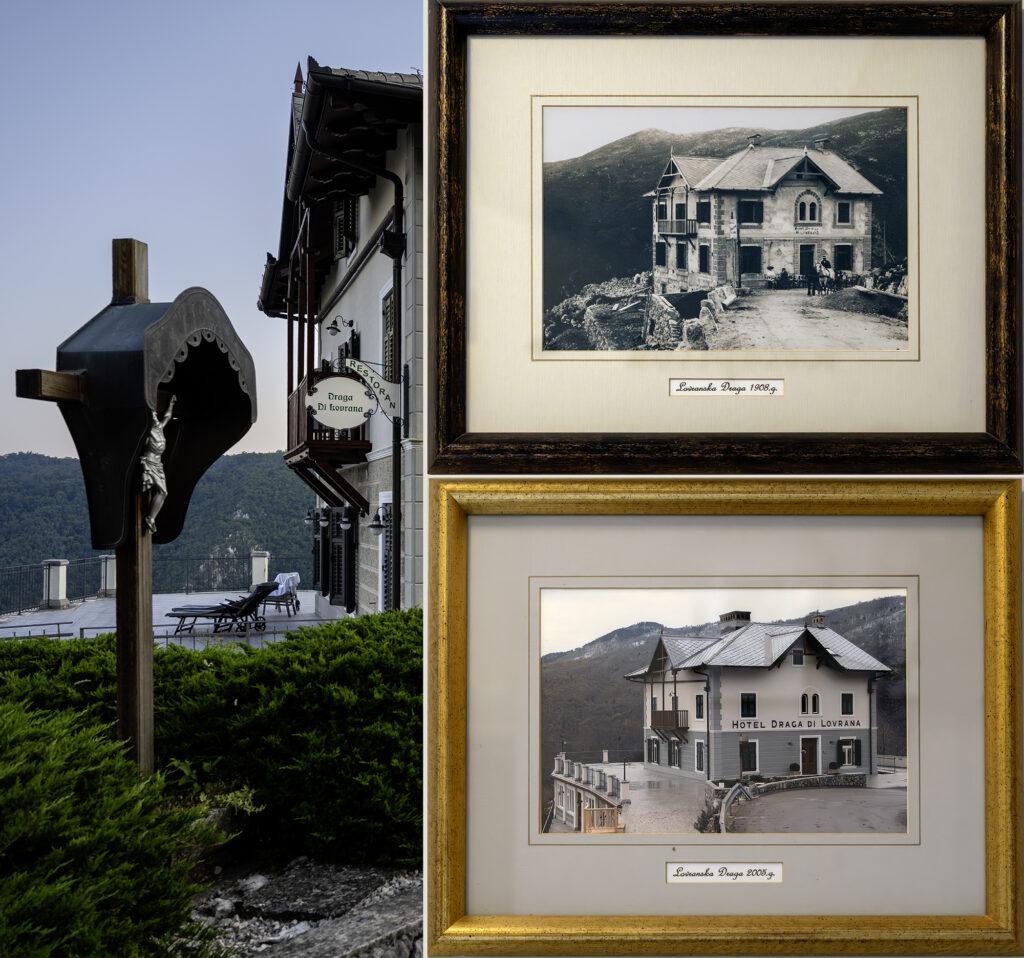
Over a century ago, in the foothills of the Učka mountain range, a beautiful, isolated hotel overlooked the Kvarner Bay from an impressive cliff. The place was called Lovranska Draga in Croatian – or Draga di Lovrana in Italian – draga designating a kind of hollow in Croatian, and Lovran being the name of a village on the Istrian coast below. Built in 1908 by Anton Urm, a Viennese entrepreneur, the luxurious establishment attracted guests from all over the Austro-Hungarian empire, until tragedy struck: one evening in 1923, the house caught fire (though, allegedly, the owner himself set it ablaze as part of an insurance scheme).
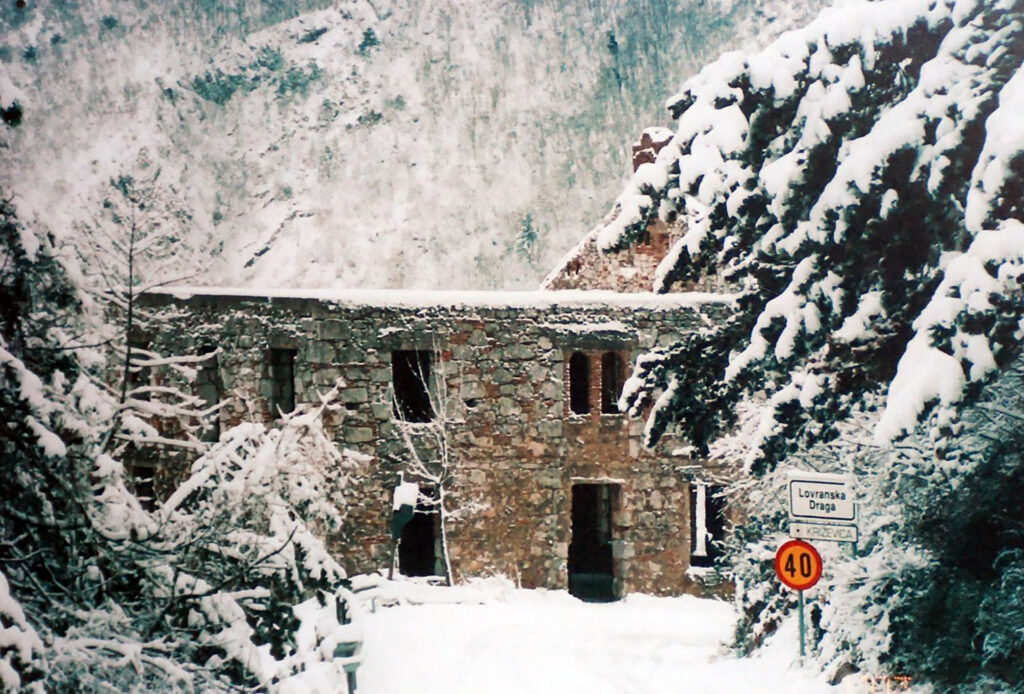
Some time later, a family bought the dilapidated remnants and began renovations, but a storm ripped the roof off, scattering tiles far and wide. No other house was damaged. The owner soon fell ill and died. The next owner also died of a sudden illness. Yet another owner perished in a car accident months into renovations. Rumor spread that the place was cursed. What could happen next?
Spaghetti nazisploitation! During WW2, as Mussolini’s army often deported entire villages’ populations to camps for their alleged collaboration with communist partisans, one officer by the name Scrobognia, from Rijeka, was responsible for bringing young girls to the army headquarters in nearby Opatija for high-ranking officers’ entertainment. As a sort of job perk, Scrobognia would take those that weren’t chosen by the bigwigs to the abandoned Draga house to satisfy his own depraved fascist inclinations, torturing and killing at least one of them. Two more women died there shortly after the war under mysterious circumstances, and the ghosts of the three women are now said to haunt the place.
How do we know about all this exactly? Enter the occult practitioner… Some time around the turn of the new millennium, a spiritual expert by the name Borivoj Bukva bravely entered the house. The name Borivoj means “battle fighter” in Slavic languages, and he made sure that anyone who interviewed him got their money’s worth. “Time collisions here begin exactly with the era of the prehistoric man and the descent of hordes from the north. Human sacrifices were thrown from these cliffs into the abyss for the gods. Since then, this place has been marked,” he explained in one instance. Bukva visited the house several times, using a pendulum to try to communicate with spirits. According to this account, he was once commanded to get out of the house, while another seance proved more successful, and the motions of the pendulum revealed that three spirits have inhabited the house since falling victim to tragic crimes, and that someday a foreigner, like the original owner, would acquire the house and restore it to its original purpose of hospitality.
More tales of paranormal phenomena, ominous warnings, and deaths have cemented the reputation of the building as Croatia’s most haunted: a man slit his wife’s throat, stripped naked and threw himself off the cliff; Czech tourists sheltering inside during a storm were struck and killed by lightning; a restaurateur and his lover, also taking refuge in the dilapidated house during a downpour, heard loud noises of laughter, clinking glasses and plates, then escaped only for their car to slowly slide toward the edge of the cliff… Locals avoid the place like it’s a ćevapi joint on Good Friday, and many don’t even dare talk about it.
Does the curse live on? Around 1978, the Nikolac family bought the place, with the intention of eventually restoring it to its original splendor. In 2005, renovations were finally completed, recreating the historical design. The current owner, Christian Nikolac, whose father died in a car accident shortly after the renovations started (sounds familiar?), has turned the place once again into a hotel and restaurant. Incidentally, he is of Hungarian and Italian descent, and his father had Austrian citizenship; a foreigner, as the pendulum predicted. But Nikolac doesn’t believe in ghost stories: nothing strange has happened, and guests are enjoying their stays, he claims… Until another road-related disaster of sorts struck recently. This one took the shape of a creature of formidable size: the Michelin Man.
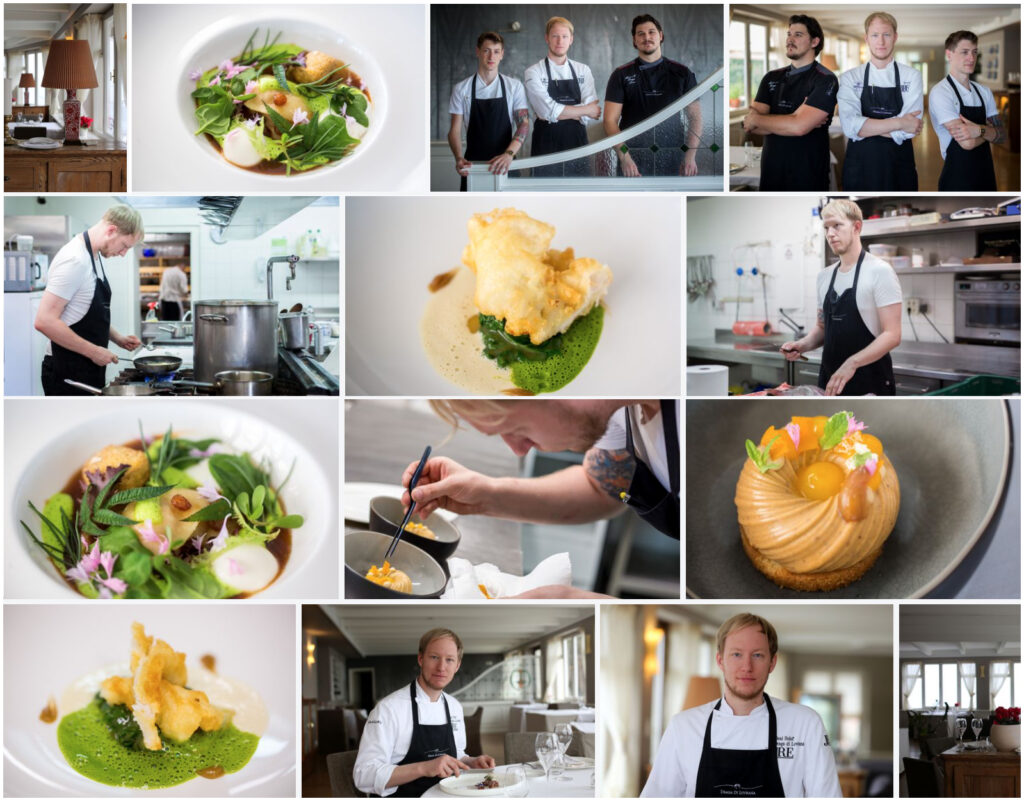
After the renovations, chef Zdravko Tomšić spent over a dozen years crafting an ambitious vision of traditional Mediterranean cuisine with a modern twist. He eventually left and passed the reins of the kitchen to his talented protégé, chef Deni Srdoč, only 24 years old. Within a couple of years, Srdoč was named Young Talent of the Year by Gault & Millau, and under his leadership the restaurant earned a highly coveted Michelin star in 2019, making Srdoč the youngest chef in Croatia awarded the distinction. This article gives an idea of what the restaurant was like at its peak. Srdoč eventually went his own way too, and in 2024 the restaurant committed gastronomic heresy by returning its Michelin star. Owner Nikolac explained: “What had long been a dream […] unexpectedly turned into a burden. […] My daughter Kelly Nikolac, a young force in the family, expressed her desire to lead a restaurant and hotel, but according to her vision, without the hindrance of successes and rankings. She decided to create her own story, as a logical continuation of her parents’ idea, and to return to the familiar feeling of hospitality, as it was originally conceived. […] We lost guests, and investments in a restaurant with a concept of cuisine like ours proved unsustainable. I want this to be a place where guests feel comfortable, without the obligation to dress formally, bringing children or even their dog.” The restaurant would reintroduce “familiar flavors” through a new à la carte menu based on locally caught seafood and dishes typical of the Kvarner Bay with strong influences from Italian cuisine.
The curse had resurfaced, but instead of The Haunting it was now more like The Fall of the House of Usher. Reviews claimed that the restaurant had serious problems in the kitchen: bland food, ingredients of questionable freshness, inconsistent presentation, and overall dull dishes more fit for a neighborhood Mediterranean tavern than for the Draga di Lovrana of yesteryear.
I, however, don’t spend my time following culinary news from Croatia. In my quest to dine at as many Michelin-starred restaurants in the region as possible, I anticipated my stay at Draga di Lovrana in blissful ignorance of the return of the star and the debacle that followed. By the time of my summer visit several months later, I still had no idea. So what happens when you think you’re dining at a Michelin-starred restaurant when in fact you’re not? You’re about to find out!


Shortly after our arrival, we begin to perceive that something isn’t quite right. It’s the height of tourist season, a hot and perfect July evening, but both the hotel and its restaurant are nearly deserted. The terrace is said to offer one of the most breathtaking views from any restaurant in Croatia, a country not exactly lacking in stunning vistas, yet at 8 pm only one other table is occupied, with a German couple wrapping up their early dinner. A few minutes later, the last couple of the evening arrives and is seated near us, the man strongly reminding me of Grigori Rasputin’s Serbian cousin, dragging behind him a majestic Chow Chow on a leash as thick as a mooring rope. The staff promptly brings a water bowl to the prodigious beast, which will stand guard over its monastic master and his ladyfriend throughout the dinner.
Speaking of the staff, it appears to be a skeleton crew of just two servers: an older man, gruff and monosyllabic, speaking to us only in German (we do not speak German), and a younger woman who has a rudimentary grasp of English but whose familiarity with the menu suggests she might have been hired earlier that day. Adding to our growing bewilderment, the menus we’re handed hardly evoke a Michelin-starred experience. Charcuterie plate, beef tartare, grilled steak? Baked fish, “noble fish” with sauteed kale, langoustine risotto? I like all of these dishes but I could have found them in any number of restaurants down along the coast. Almost as an afterthought, a timid “Tasting Menu” section near the end offers 5 unspecified courses (you choose “fish, meat, or mixed”).
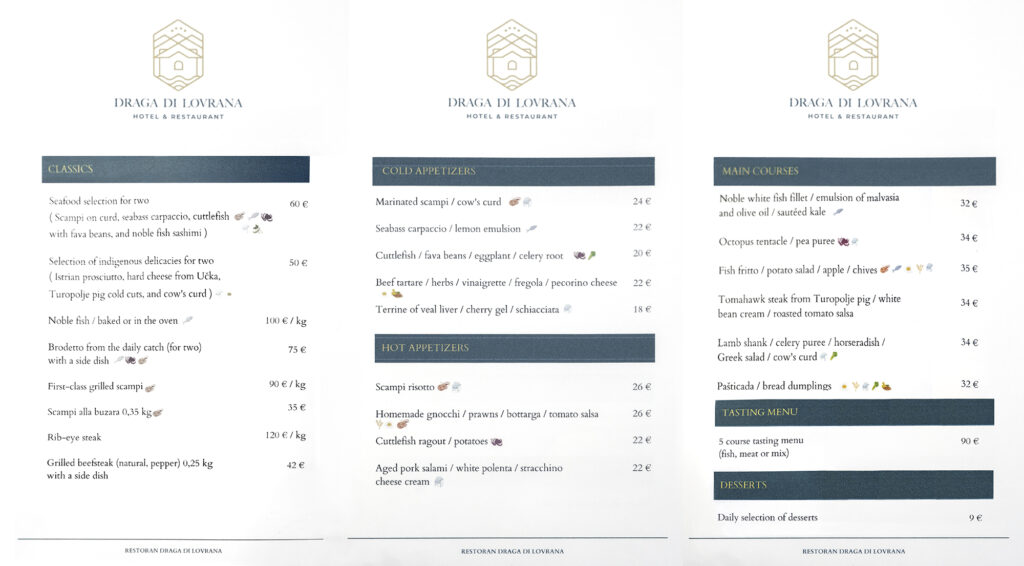
Never losing faith in mankind, we go ahead and order the tasting menu (all fish), along with a wine pairing. Ah, but no, sir, there is no wine pairing. In fact, the restaurant appears to be quietly draining its cellar of all former, more prestigious holdings, leaving guests to guess which bottles on the list are still available and which have been 86’d, never to return. What follows is a sad version of single-player wine Battleship, requiring four turns before we finally score a hit. At this point, we’ve also been having an innocent conversation about Michelin-starred restaurants that involves pulling up a list on my partner’s phone, which leads to our dawning realization that Draga di Lovrana is not on said list, and our shocking discovery of the bitter truth about the dream-turned-burden, the return to familiar flavors, and the ambition to make dogs feel comfortable. But here come the first plates…
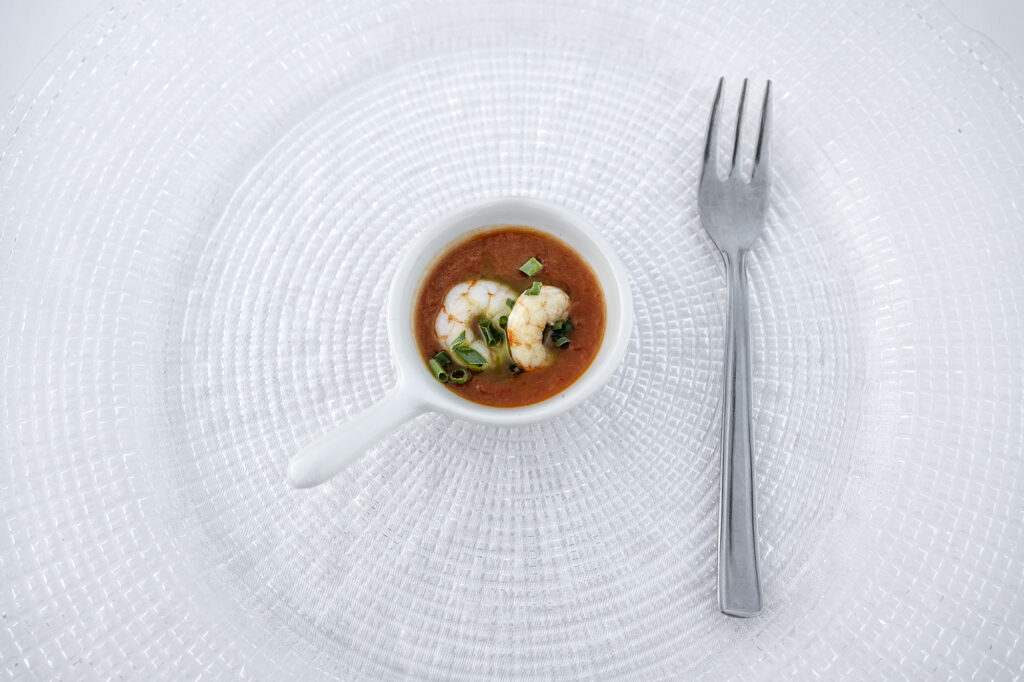
The amuse-bouche consists of a little shrimp with tomato-paprika gaspacho. While the shrimp are rather bland, the gaspacho packs a lot of tomato and olive oil flavor, the paprika adding a little kick. Notice the carelessly chopped chives, though.
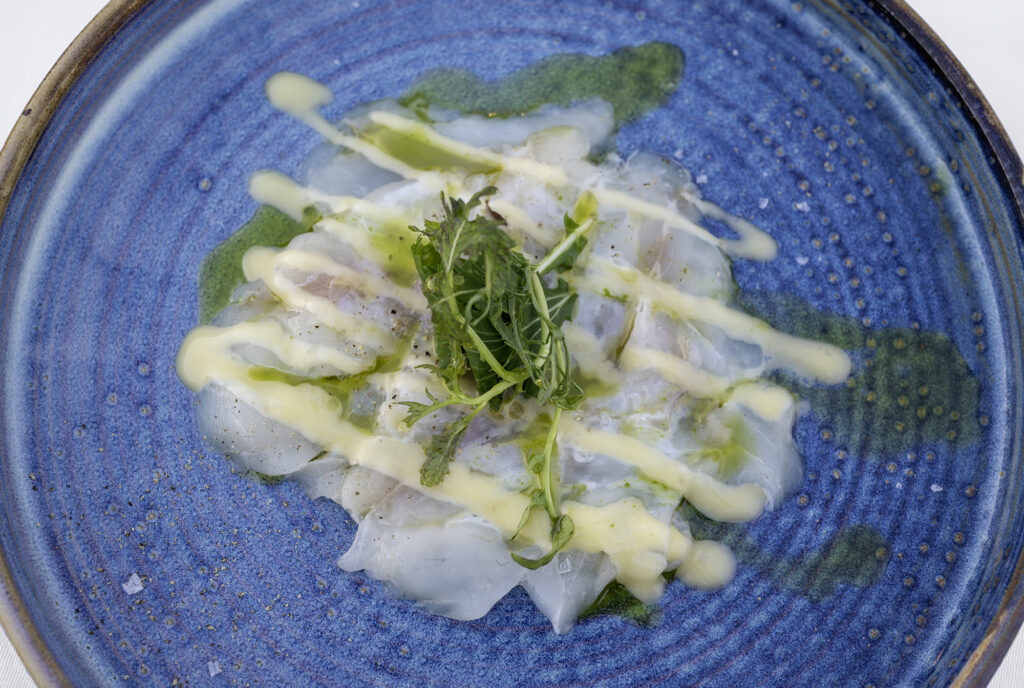
Next comes a seabass carpaccio with an emulsion of lemon, olive oil, and honey, drizzled with parsley oil. The carpaccio is nice, but it’s just a carpaccio, and seabass isn’t my favorite fish for carpaccio in the first place. I taste the parsley oil, the lemon a little bit, the honey not at all. Fish, lemon, and parsley, what an original pairing… The plating continues to be pedestrian. The lemon emulsion’s zigzag squiggle pattern reminds me of Italian restaurants in New Jersey. One of the plates is sprinkled with fleur de sel, the other one less so, and a few stray speckles suggest that the cook simply missed the plate during seasoning.
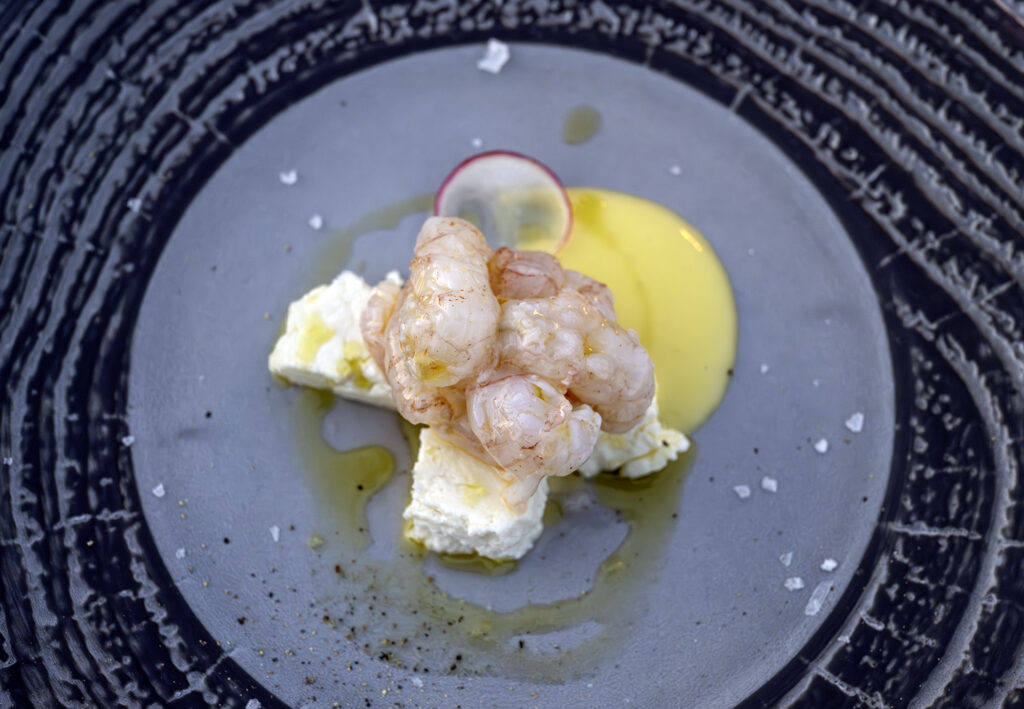
We continue with marinated langoustines, local skuta (cow’s cheese) from the Učka region, and a little bit of emulsion of lemon, olive oil, and honey. Deja vu? Yes, that’s the same sauce as in the previous dish. But not quite: the previous emulsion didn’t taste enough like lemon, this one tastes too much like it, and there’s a lot more of it on the plate. Still, it’s a good dish: the skuta is very light with a robust milk flavor, the preparation is simple, and it’s hard to go wrong with langoustines.
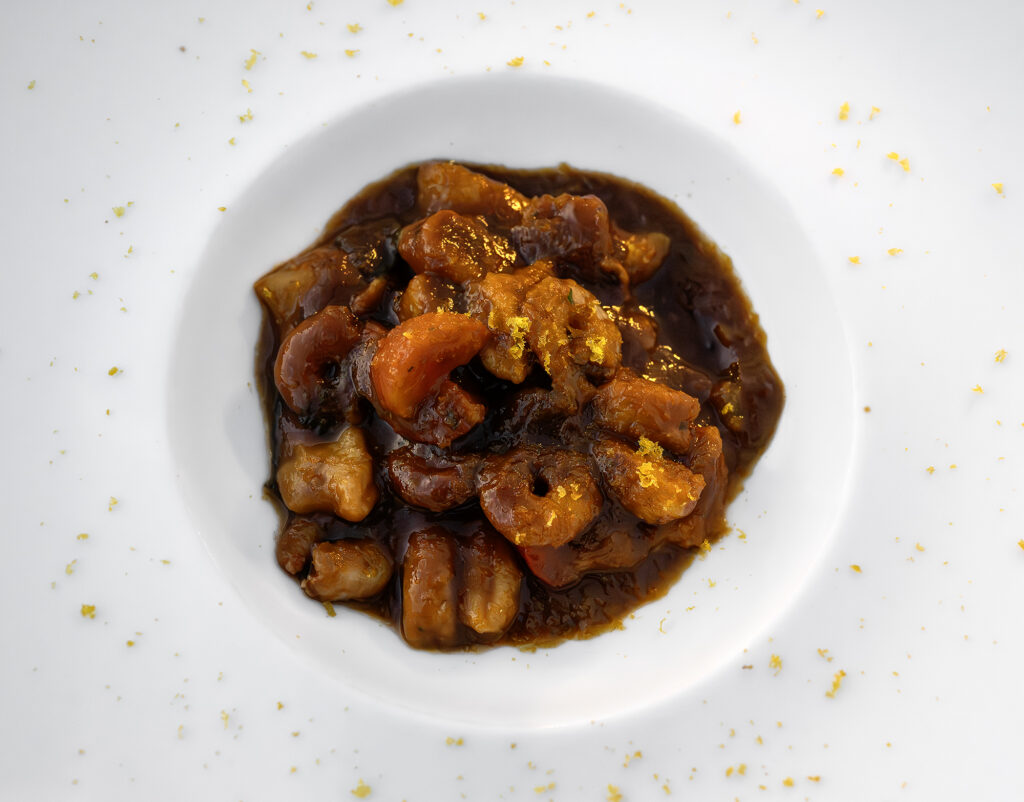
The gnocchi with bottarga, prawns, and tomatoes follows the same pattern: simple, reasonably good, but again borrowing a lot of elements from the previous dishes – the small shrimp (more flavorful this time) and the tomato-based sauce. This very strong sauce features a careless mix of basil leaves (some chopped, some not) and cherry tomatoes (some cooked, some almost raw), distributed haphazardly among the plates so that no two guests really eat the same dish. Strangely, the bottarga is sprinkled around the plate rim rather than over the food. The gnocchi are small and airy, but this is not a very subtle dish.
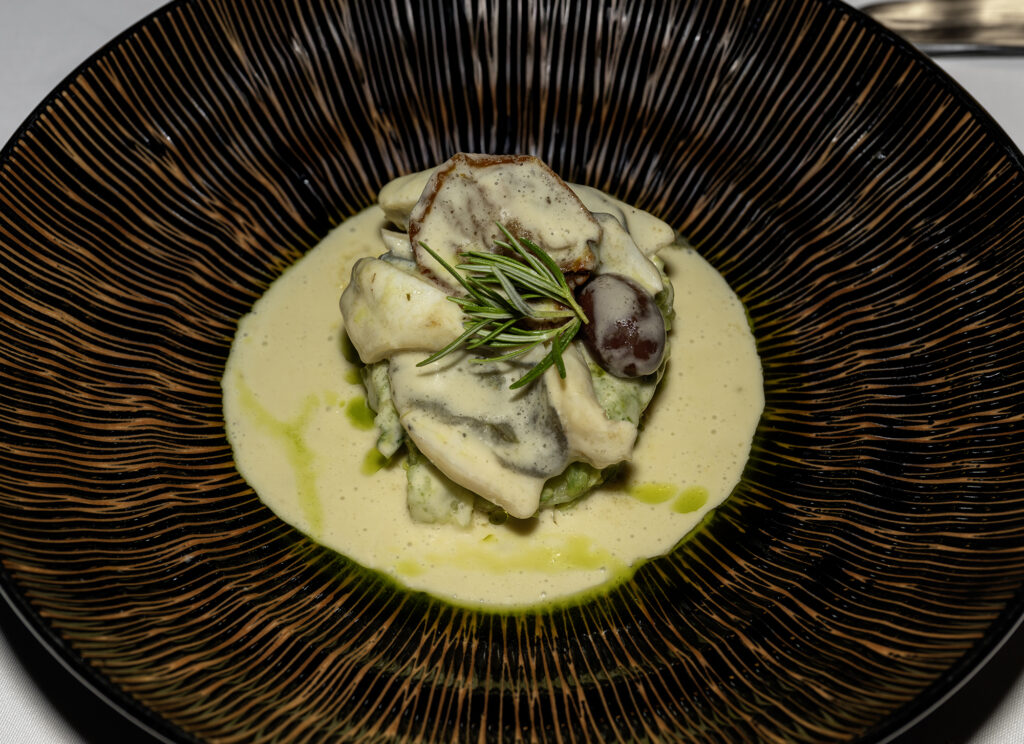
The John Dory is served with an emulsion of Malvasia wine, a drizzle of olive oil, and a side of kale, olive, and dehydrated tomato (or to be precise, one olive and one piece of sundried tomato, plus rosemary sprigs that serve no purpose). The sauce reminds me of a beurre blanc; the kale is mixed with potatoes like in a blitva (though once again in varying proportions depending on the plate). The fish itself is excellent, and this feels like a relatively well-executed classic Croatian dish with a nice plating, misguided garnishes and inconsistent preparation notwithstanding.
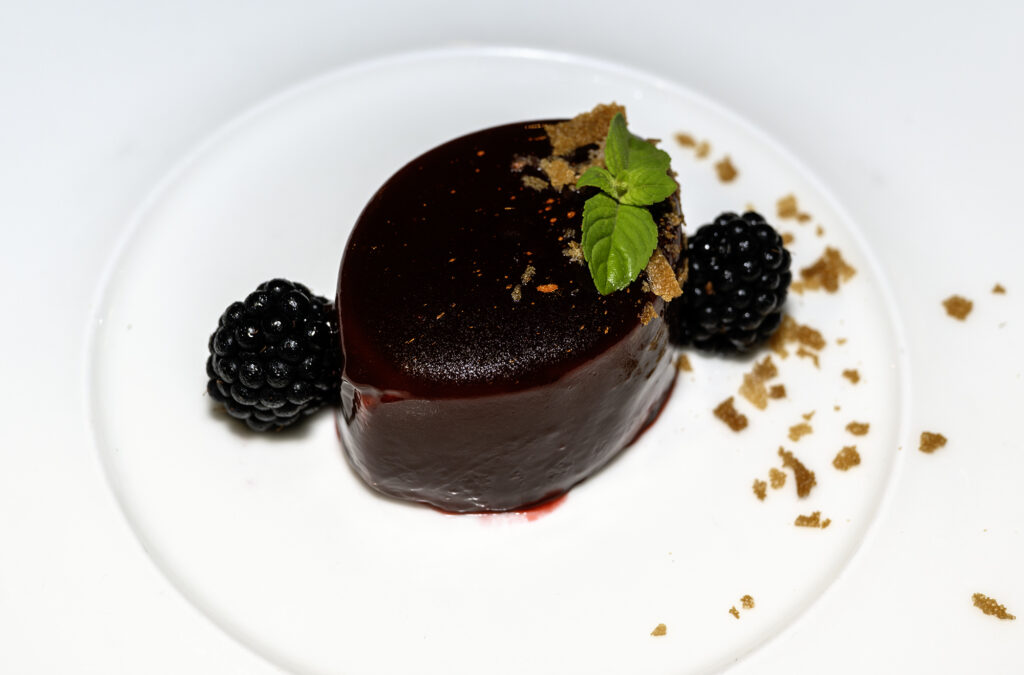
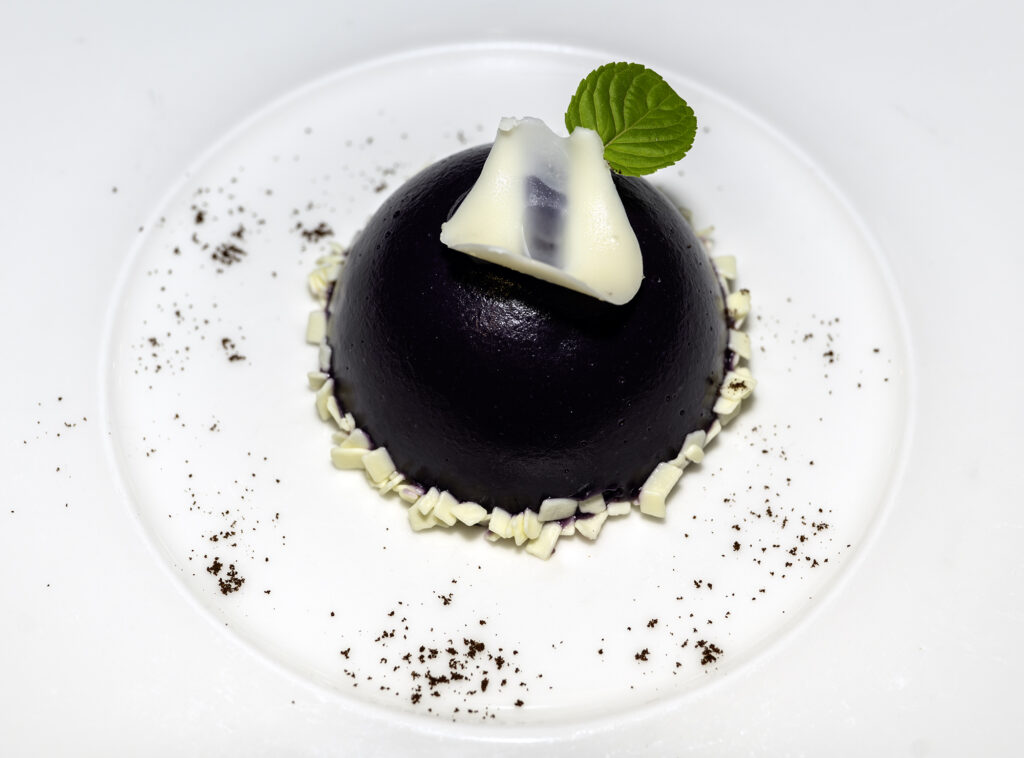
We complete our meal by sharing two desserts: a mixed berry-vanilla and a blueberry-chocolate. The former just tastes sweet and almost artificial. If it weren’t for the color of the two layers under the glaze, I would have recognized neither berries nor vanilla. On the other hand, the blueberry-chocolate one impresses with its cool dark-purple color and a very sticky, dense chocolate mousse inside, with some pieces of blueberry. I like it quite a bit.
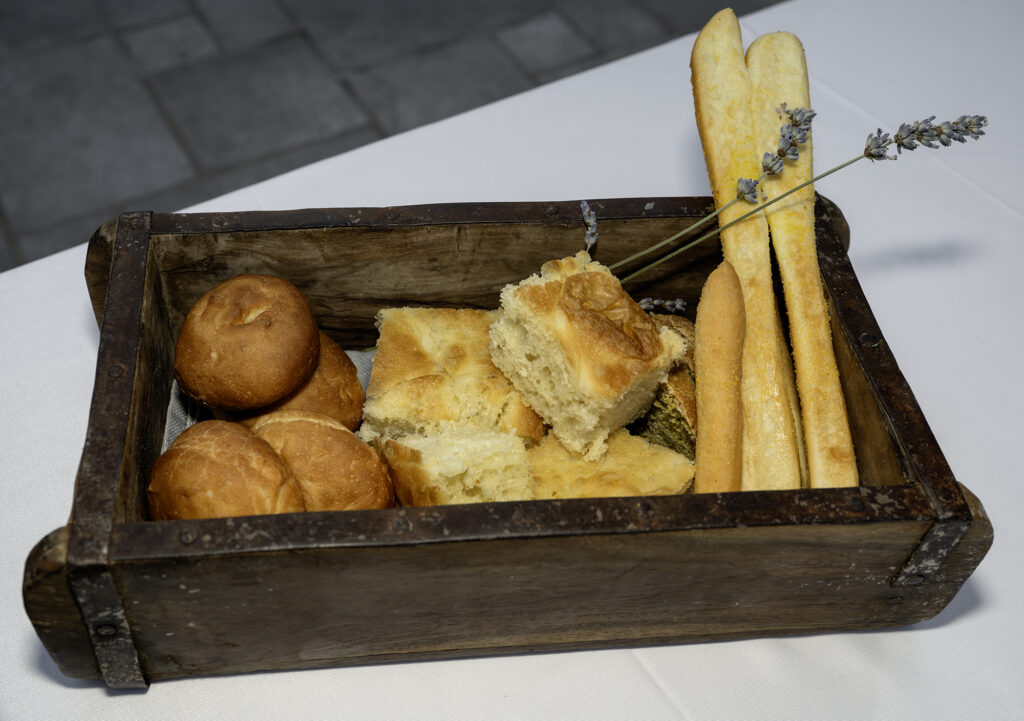
In the end, the only ghost we’ve seen at Draga di Lovrana is the Ghost of the Michelin-starred Restaurant Past. While the breathtaking view, the pretty dinnerware, and a few bottles of fine wine are still there, just about everything else that made a fine-dining restaurant is gone. The front of the house has a lot of issues I wouldn’t expect to see at this level, which makes the vibe slightly grim, and the tasting really consists of a few random dishes picked from the à la carte menu. Not only would you be better off choosing your own (you’d be more likely to avoid repetitions), but five full-size dishes represent a substantial amount of food for a single diner. I can’t help but suspect that the current chef is actually a former line cook who stayed behind after everyone else in the kitchen left, paring the menu down to the few preparations they knew how to make. Not the best of line cooks, either, as evidenced by the lack of consistency on the plates. Had I been served the same meal at a random restaurant on the seafront, for half the price, I wouldn’t have any complaint. But I wouldn’t be writing this post either, as I’m not writing about every half-decent restaurant meal I eat on my travels unless I find something surprisingly original. Looking at the current menu on the restaurant’s website (and who knows how often that gets updated), I see that it’s gone further down the path of boredom: tuna tartare with soy sauce, risotto, parmigiana, grilled steak, rice, “noble fish”… and still the ridiculous 5 course tasting menu for the lost travelers.
There might be a world where families with children cheerfully abandon the sun-drenched Istrian beaches to drive twenty minutes up a winding, nausea-inducing road expressly for the privilege of lunching on a terrace perched on a cliff notorious for luring people to their deaths, where dog lovers pause mid-walk to sip wine (when still available) while their four-legged companions wag happily, and armies of off-the-beaten-path mountain hikers plop their mud-splattered behinds onto restaurant chairs to casually drop a hundred euros per person on an average meal. Sadly for the owners of Draga di Lovrana, this is not our world.