Skuta, a kind of farmer cheese, is ubiquitous in Slovenia and some parts of Croatia. I’ve talked about it on several occasions: in this post, I mentioned Pag skuta, a kind of ricotta made from the whey left over from the production of the famous cheese from the island of Pag; Gostilna Skaručna served me two different skuta preparations, one with olive oil, mustard seeds, and herbs (dill, chives), and the other as a kind of spicy Liptauer, with paprika, hot pepper, and onions; more recently, I reviewed Draga di Lovrana and its langoustine dish made with a very airy skuta from the Učka region, boasting a robust milk flavor.
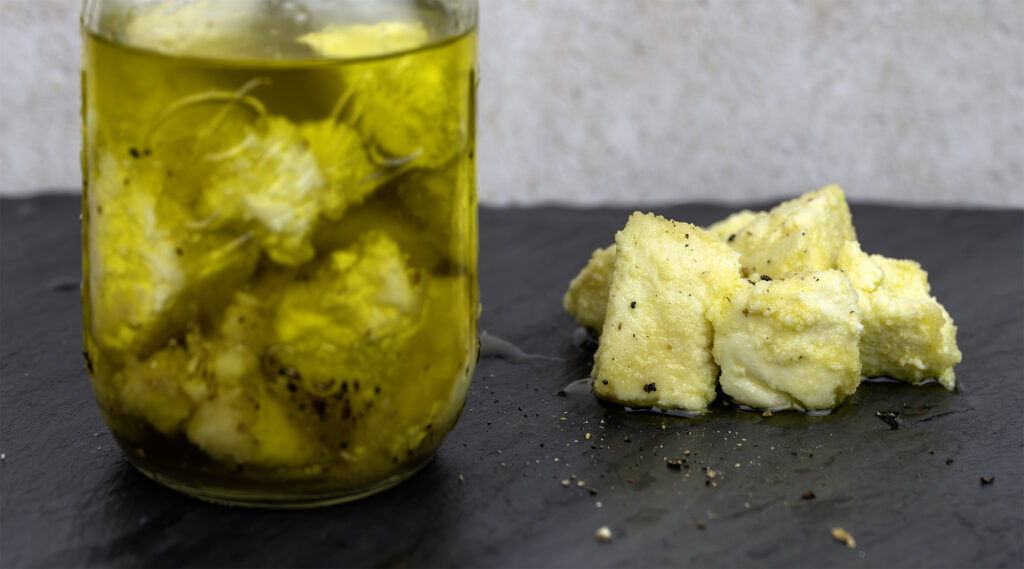
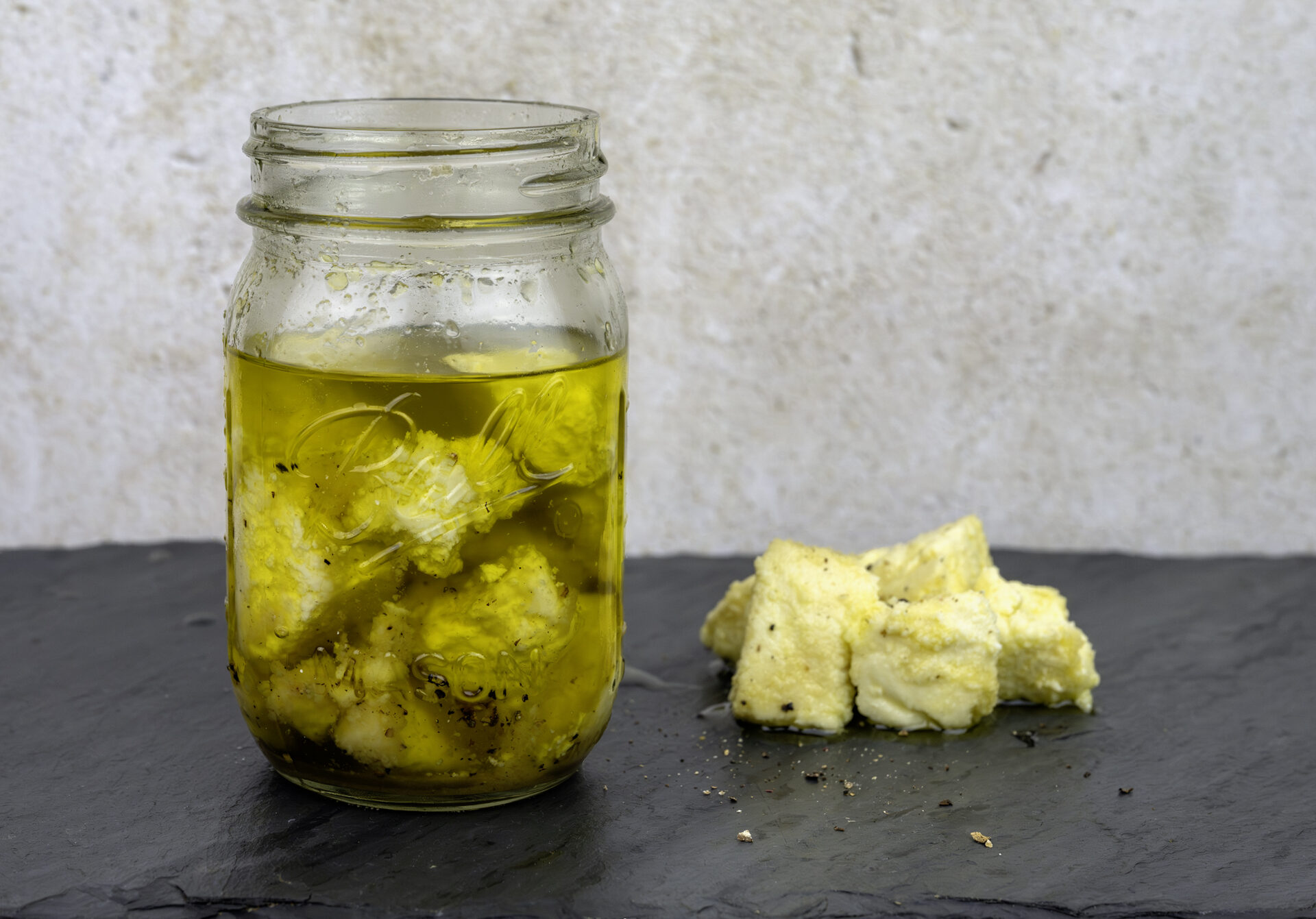
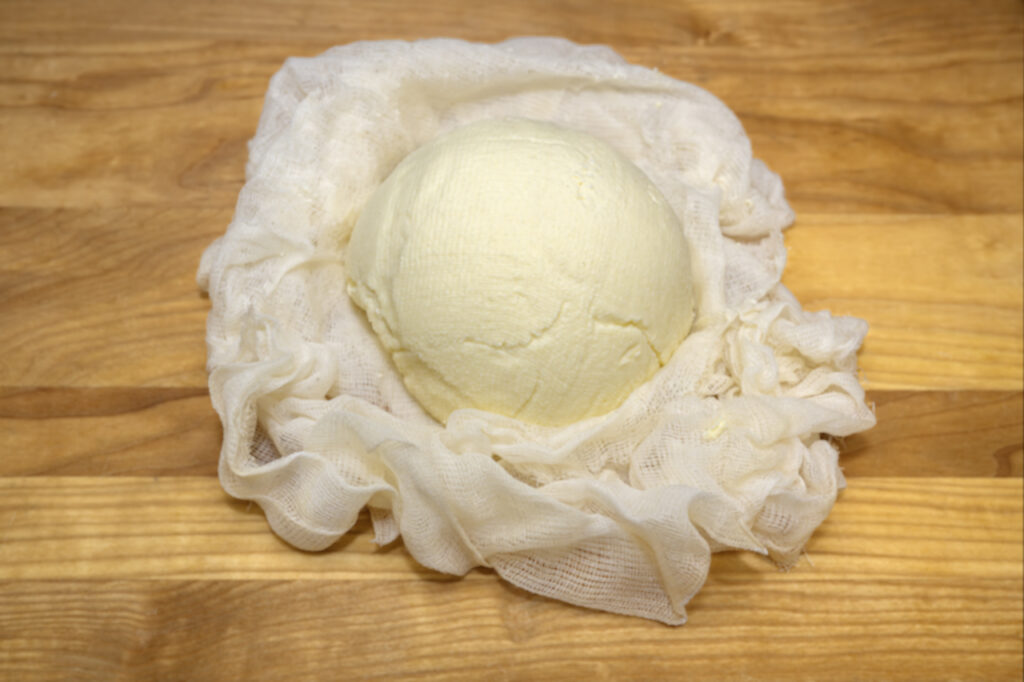
Time has come to make your own, and this is by far the easiest cheese to prepare: heat the milk, add some acid, strain the whey, and voila! You’ll find that the result offers a mild, creamy flavor, and you can adjust the final step to get the texture you desire. If you plan to use the skuta as a spread, simply store the strained mass in a container to preserve its soft and supple texture, optionally mixing it with herbs and spices. If you prefer a firmer cheese, gently squeeze the cheesecloth containing the skuta, or place a weight on top of it for a few more hours. Since a firm skuta will then hold its shape, you can marinate it in honey and olive oil, two emblematic products from the Adriatic coast. Recipe at the bottom of this post!
Skuta
Yields about 300 g
Total preparation: 6 hours 30 minutes
Active preparation: 15 minutes
5 g citric acid
50 g water, lukewarm
2 kg raw or non-ultra-pasteurized cow’s milk
- In a small bowl, dissolve the citric acid in the water, stirring as needed. Reserve.
- Line a strainer with two layers of cheesecloth, and place over a large bowl.
- Rinse a large pot with water and place it on your stove top without wiping it dry. Pour in the milk, and bring to 85 C / 185 F over medium heat, stirring regularly with a spatula to prevent scorching.
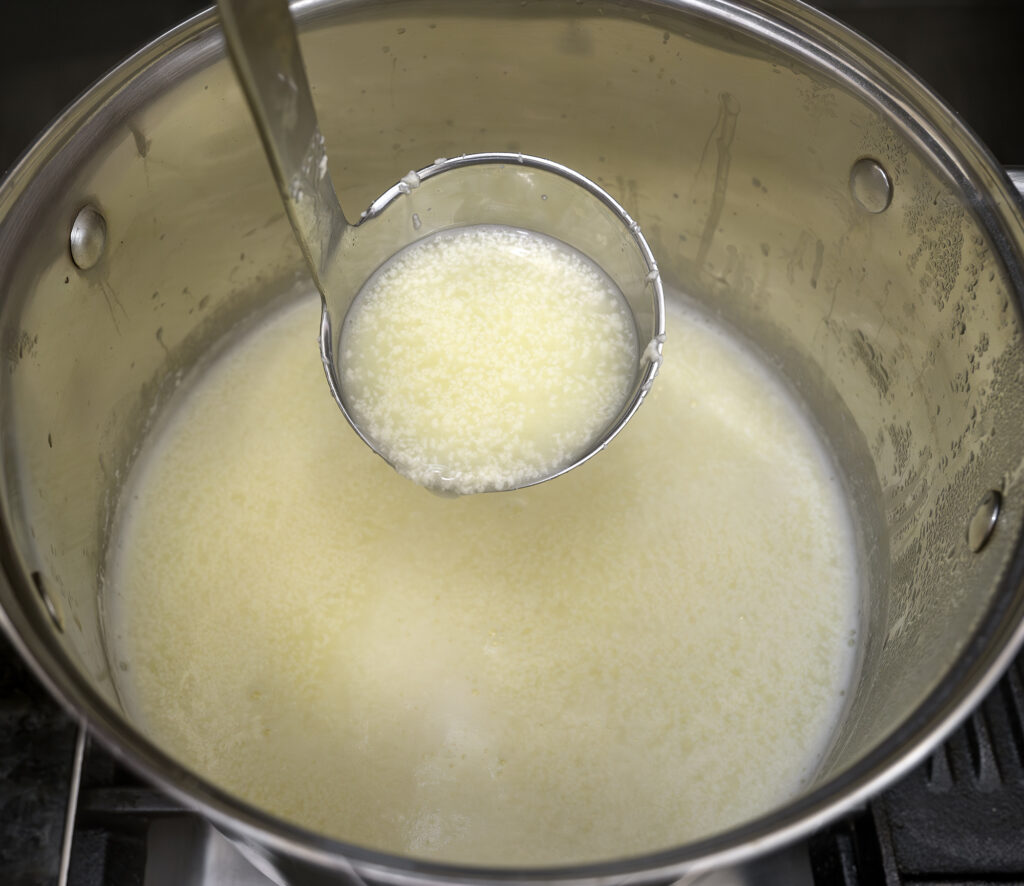
- Turn off the heat, then add the citric acid mixture, stirring gently until curds form; this should happen in less than a minute. The white lumps are the curds (their size may vary), and the yellow liquid is the whey. If curds do not appear, add a little bit more citric acid dissolved in water. After the curds form, let the mixture sit undisturbed for 10 minutes.
- Ladle the curds and whey into the lined strainer, and allow the whey to drain into the bowl for 15 minutes.
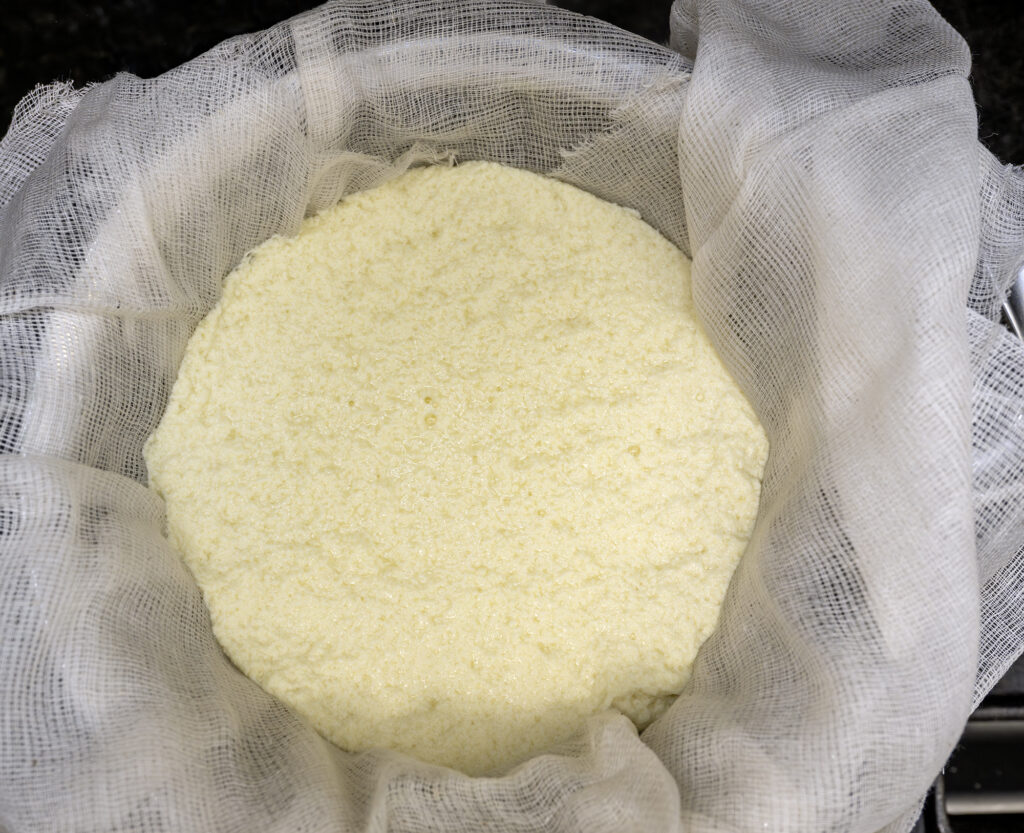
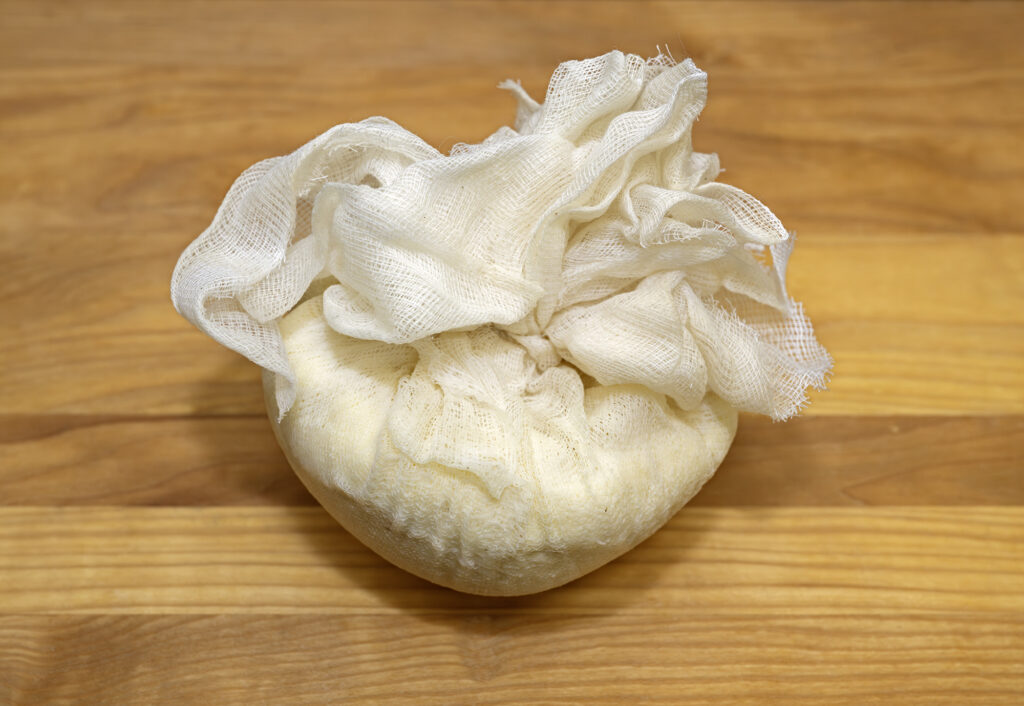
- Tie the cheesecloth into a bundle using twine. Transfer to a smaller strainer over a smaller bowl and let drain at room temperature for about 6 hours. Reserve the whey in the refrigerator; it can be used to make bread, crepes, or soups.
- If you want a firmer cheese, gently squeeze the cheesecloth containing the curds, or place a weight on top of it, and let drain for a couple more hours.
- Unwrap the skuta, transfer to a bowl, cover, and refrigerate. The skuta can be kept for a few days, or longer if you vacuum-seal it.
Marinated skuta
Yields about 1 pint jar
Total preparation: 6 hours
Active preparation: 10 minutes
150 g olive oil
65 g honey
6 g salt
6.5 g black pepper, coarsely ground
250 g skuta (firm)
- In a bowl, combine the olive oil, honey, salt, and pepper.
- Cut the skuta into 2 cm cubes, and gently toss into the marinade.
- Transfer to a mason jar, seal, and refrigerate for at least 6 hours. The marinated skuta can be kept in the refrigerator for a week.